On Sept. 25, Luis Rodriguez sat with friends near the corner of North Seventh and Willow streets, discussing where to get a meal. But instead of weighing options like McDonald’s or Sheetz, they were searching Google for nearby soup kitchens and their operating hours.
“Let me be very clear, I don’t want anyone to think I’m some kind of cause,” he said. “But when your stomach aches and your wallet is empty, you have to consider options you may not be comfortable with.”
Rodriguez and his mother have rented a two-bedroom apartment in Lebanon since he graduated from high school more than two years ago. Both work at least one part-time job while caring for his brother who was diagnosed with autism. The family has scaled back on necessities because of rising costs associated with their $1,260 monthly rent and utilities. Rodriguez said he often rides a bicycle instead of driving because of high gas prices.
The family depends on the mother’s Supplemental Nutrition Assistance Program, or SNAP, benefits for the bulk of their food costs. But those benefits have been placed on hold for months, with Rodriguez saying the explanations include the new work requirements and processing errors.
Meanwhile, this three member family rely on relatives’ support and increased use of food banks to stock their shelves.
“It’s disheartening to open the fridge and see almost empty shelves staring back,” he said. “Don’t government (politicians) know we are starving?”
In Lebanon County there are more than 19,830 people who are experiencing food insecurity, based on the Central Pennsylvania Food Bank’s 2026 Food Insecurity Report. That total includes more than 6,250 children.
Shila Ulrich, president and CEO of the Central Pennsylvania Food Bank, said food insecurity has risen sharply across the commonwealth amid challenging economic conditions and policy changes.
“We have seen an increase of demand by 44% over the last two years, and 9.1% since January 2025,” she said.
According to the report, areas with the highest concentrations of food insecurity include Lebanon, Palmyra, South Londonderry Township, Swatara Township, Jonestown, Myerstown, and portions of North and West Lebanon townships.
Among the factors contributing to food insecurity is the decline in SNAP participation. The Center on Budget and Policy Priorities estimates more than 5.5 million people nationally have lost benefits between July 2025 and July 2026.
The average SNAP benefit in the commonwealth is $183 per person, per month, according to the Pennsylvania Department of Human Services. A DHS spokesperson noted that a household’s actual benefit can vary based on income, household size and other factors.
More than 296,000 Pennsylvanians lost SNAP benefits between December 2024 and July 2026. Lebanon County has seen a 10.9% decline in SNAP participation since December 2024. Ulrich said more than 90% of that decrease occurred after July 2025, following implementation of some SNAP-related changes included in the One Big Beautiful Bill Act.
“That translates to more than 2,000 people in Lebanon County no longer receiving benefits, from 19,000 down to 17,000 (individuals),” she said.
There has been a 11.6% increase in demand for charitable food sources in Lebanon County since January 2025. Ulrich said that there was a 13% increase from SNAP participants using those services.
“We believe that the changes made by the One Big Beautiful Bill have changed SNAP participation and driven people into the charitable food network,” she said.
Federal food woes
In 2025, President Donald Trump signed into law H.R. 1, also known as the One Big Beautiful Bill Act. Among its changes, the plan implements new work requirements, requires states to provide 75% of SNAP administration costs, and limits SNAP eligibility to citizens and lawful permanent residents.
The U.S. Department of Agriculture reported the number of households enrolled in SNAP programs nationally dropped to 19.8 million in June. Meanwhile, the department reports prices for food are 30.34% higher in 2025 versus 2020, with prices for all food projected to increase by another 2% by 2027.
The Central Pennsylvania Food Bank reported that charitable food demand among non-SNAP participants has increased 10.3% statewide since January 2025. Ulrich said the food bank is serving an additional 278,000 people each month.
“In Lebanon County alone, there is an overall food insecurity rate of 13.8%,” she said. “Most alarming is that 19.2% of children live in food insecure households. So that’s one in five children across our service territory.”
While the need for the charitable food system grows, organizers report that USDA food distribution has dropped 54% in the last two years in Pennsylvania alone. Federal food assistance through the Emergency Food Assistance Program and Local Food Purchase Assistance Program to Pennsylvania fell by 37.5 million pounds between fiscal years 2024 and 2026. The Central Pennsylvania Food Bank reported a loss of 9.5 million pounds during that same period.
Local pantries
When the Lebanon Daily News visited the Salvation Army’s Client Choice Pantry on the morning of Oct. 1, organizers had already served more than 102 residents. Board Secretary Laura Sutherly, who volunteers at the pantry, said they’ve seen a steady increase in older adults seeking assistance.
“I had a woman two weeks ago come in … she got to where we have the vegetables and the refrigerated section and started crying,” Sutherly said. “I just said to her ‘Are you OK?’ and she said to me ‘You don’t understand, I’ve been homeless for a year, and I finally got an apartment, and I’m actually going to have food in a refrigerator and not have to worry about where my food is coming from.’”
Between July 2025 and June 2026, the Salvation Army Pantry served more than 2,455 individuals. More than 1,534 of those individuals were first-time users. Salvation Army Administrator Lt. Richard Mahida said volunteers often hear that people delay buying food in order to pay for other necessities, including rent and utilities.
“I’ve heard these exact words: ‘This is my first time, I have never needed food support before,’” he said. “You can tell by the way they share that, there’s so much hesitation. … It’s not a good feeling for some of them who had never needed that food assistance, but now because of their financial situation, they need that assistance.”
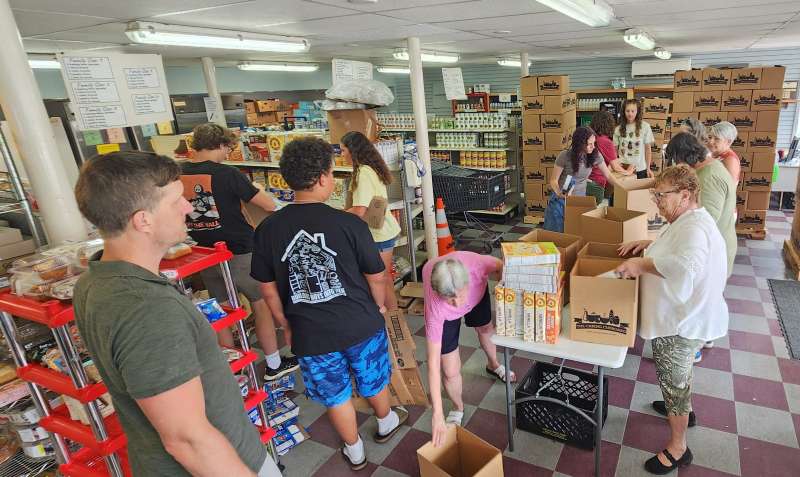
On average, the Caring Cupboard has seen service increase by 507 households over the last 12 months across its Palmyra and Jonestown locations. Officials reported a 6% increase in clients age 65 and older, while more than 32% of the individuals the pantry routinely serves are children under 18.
Executive Director David Fitzkee said the pantry serves nearly 500 households each week at its two locations.
“We have been having conversations with our neighbors, trying to understand what the SNAP impact has been,” he said in a call with the Lebanon Daily News. “I don’t think the impact of SNAP cuts are being felt by the local families yet … but I am anticipating as the reality starts to catch up and those cuts are felt by the households, we’re going to see a continued increase on new ones.”
Lebanon County Christian Ministries served more than 42,111 free meals over the last year, according to executive director Bryan Smith. During that same time, the pantry served 63,026 people, up from the 60,475 people they served in fiscal year 2023-24.
In fiscal year 2025-26, LCCM distributed 1.1 million pounds of food to the Lebanon community. In fiscal year 2023-24, the pantry distributed 512,530 pounds.
“We’re proud that we’ve been able to do it, but it’s not a great statistic to be excited about that we’ve distributed 1.1 pounds of food in the charitable food system,” he told Lebanon County Commissioners during their Oct. 15 meeting.
Organizers from both the Caring Cupboard and the Salvation Army told reporters they expect demand at their pantries to continue rising in the months ahead. Still, residents using these services often would prefer other options before admitting they need help buying groceries.
“Sometimes you don’t even have to ask them why they are here,” Mahida said. “We would see plenty of clients who would just come and I would hear them sobbing because they got so emotional sharing what they are going through.”
When the Lebanon Daily News met with Rodriguez again on Oct. 22, he was working with organizations and agencies to determine whether he was eligible for SNAP benefits. But even if he qualifies for the program, Rodriguez believes he and his mother would still need to rely on food banks to get by.
“Groceries and such were a problem even when my mom was getting that (benefits),” he said. “When the $1 menu looks like a feast, clearly something is very, very wrong.”
Residents looking for more information about Caring Cupboard can visit their website at caringcupboard.org, and can get more information about Lebanon County Christian Ministries on their website at lccm.us. More information about the Salvation Army’s Client Choice Pantry can be found at their website.