School voucher proponents are taking another bite at the apple after the Pennsylvania General Assembly refused to increase the Education Improvement Tax Credit (EITC) and Opportunity Scholarship Tax Credit (OSTC) programs in this year’s budget.
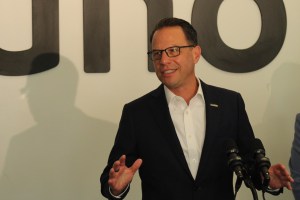
Over the past week, the American Federation of Children, which is connected to Pennsylvania’s wealthiest billionaire, renewed its calls for Gov. Josh Shapiro (D) to opt into President Donald Trump’s Education Freedom Tax Credit, created under the One Big Beautiful Bill.
“Halting EITC expansion and investing in our public education system is a step in the right direction – legislators from across the aisle and Governor Shapiro chose students over billionaires,” Aly Shaw, Senior Researcher with LittleSis, said in a statement after the budget was signed into law last month.
“Governor Shapiro must continue to choose students over billionaires and opt-out of Trump’s billionaire-backed federal voucher program.”
Similar to the EITC voucher program, advocates fear that this new tax credit will give tax breaks to wealthy individuals while diverting funds away from public schools and into the coffers of private and religious schools.
“ A lot of questions remain about how this program will work, who will benefit from it, and what mechanisms will be in place to prevent waste, fraud, and abuse of tax dollars,” Susan Spicka, Executive Director of Education Voters of Pennsylvania, said during a recent webinar.
Under the program, an individual can donate up to $1,700 to a scholarship-granting organization, who then determines which students are eligible to receive scholarship funding. That individual will then receive a $1,700 tax credit from the US Treasury at the end of the year.
Those eligible to receive scholarships include households making up to 300% of the area median income and those who are enrolled or eligible to enroll in public schools. According to the American Federation of Children, more than 1.8 million, or 89% of the state’s K-12 student population, would be eligible for the voucher program.
However, none of that money will go to the public schools themselves.
“ There is not $1 that will go to a public school to support a public school. Individual public school students themselves may receive funding that will pay for allowable expenses, but the school districts themselves will receive no funding at all,” Spicka said.
Students and families may use the funding to cover the costs of books, supplies, tutoring, room and board, uniforms, transportation, and other expenses that are common in private schools—but Pennsylvania public schools already cover most of those costs, meaning public school students would have few opportunities to use the vouchers.
”For a school district to participate, they would have to start parceling out and charging every child for a service or a good, and then they could gather voucher money, and then provide individual students with vouchers to pay for the costs that were being charged to their families.” Spicka explained.
Shapiro’s administration has remained silent on whether it will opt into the new program due to the lack of guidance from the federal government, but Spicka warns that this new pot of money will most likely go to some of the state’s most exclusive schools.
“ Since 2001, more than $3.5 billion have already been funneled in vouchers to students attending private and religious schools,” Spicka said.
“ The top 25 most exclusive and most expensive schools in Pennsylvania with an average high school tuition of $46,000 receive more than $21 million in EITC and OSTC funding in 2024-2025.”