Pennsylvania’s 2026 midterm elections are less than three months away, and some of the commonwealth’s top election experts are reminding voters that steps are being taken to make sure the upcoming election remains fair, safe, and secure.
“Millions of Americans rely on counties like ours to administer […]a free and fair election process, and we do so every single year in the primary, in general, and sometimes special elections,” Montgomery County Commissioner Neil Makhija said in an interview with The Keystone.
He added, “It happens thanks to the collaboration of citizens who serve as poll workers. In Montgomery County, we’ve got 3,000 poll workers [and] they come from both political parties.”
How to vote in Pennsylvania
Pennsylvania residents have the option of voting by no-excuse mail-in or absentee ballot, or in person on Nov. 3. If it is your first time voting in Pennsylvania or at a new polling location, remember to bring a valid form of identification. You can find valid forms of identification here.
Residents have until Oct. 19 to register to vote and until Oct. 27 to apply for a mail-in ballot.
Voters are reminded to read the instructions for their mail-in ballots and to place their completed ballot inside the yellow secrecy envelope before placing it in the outer return envelope that goes to the post office or county elections office.
Mail-in ballots must be returned to the county’s election office by 8 p.m. on Election Day to make sure they are counted, with exceptions for military and overseas ballots, which must be received no more than seven days after Election Day.
“ If people are putting their ballot in the mailbox on election day or a day before or very close to the election, there’s a risk we won’t get it by 8 p.m. on Election Day, and there’s a lot of ballots that come late every year, and they can’t get counted,” Makhija warned.
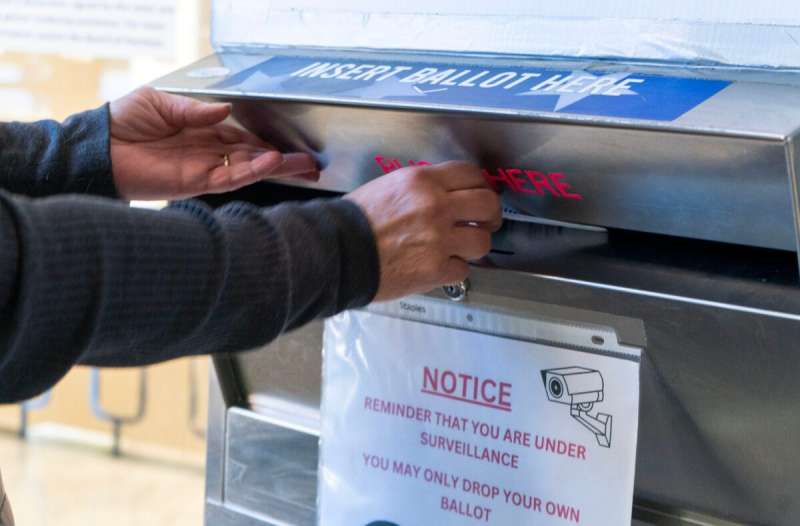
“By getting to a drop box by 8 p.m. on Election Day […] you can be sure that your vote gets counted.”
Paper ballots
Every vote cast in Pennsylvania’s 2026 midterm election will be recorded on a paper ballot, which officials say helps ensure a safer and more accurate vote count.
Green Party candidate Jill Stein sued Pennsylvania after the 2016 election over the use of electronic voting machines, and in a 2018 settlement, all 67 counties were required to use voting machines that keep a paper record.
Combating misinformation and disinformation
Pennsylvania voters may hear a lot of disinformation and misinformation about the upcoming election from online influencers or politicians, and they are reminded to rely on trusted media sources around the election.
One misleading claim that President Donald Trump’s administration has made is that there are over 14,000 noncitizens registered to vote in the Commonwealth.
A recent audit of the state’s Motor Voter System, which automatically prompts residents to register to vote after obtaining a new or updated driver’s license or ID card, found that only one noncitizen had registered to vote after investigating more than 200,000 voter applications from the Pennsylvania Department of Transportation. That person did not vote, and according to the Department of Transportation, the error was fixed before the noncitizen left its facility.
Pennsylvania Secretary of State Al Schmidt (R) challenged the federal government to reveal its methodology and criticized online influencers and officials for spreading disinformation.
“ People on social media who spread these lies don’t have to worry about being responsible,” Schmidt told reporters during a virtual meeting with the Partnership for Large Election Jurisdictions earlier this month.
“ If anything, it seems to be quite the opposite. And they gain traction while we wrestle with how to make sure that everything we say is accurate and we never get anything wrong.”