Philadelphia just came out of its third heat wave of 2026. In the last week leading up to the official first day of summer, temperatures ranged from 97 and 98 degrees on Thursday and Friday, 90 on Saturday, and 93 on Sunday.
RELATED: Hershey’s Christian Pulisic on US World Cup roster
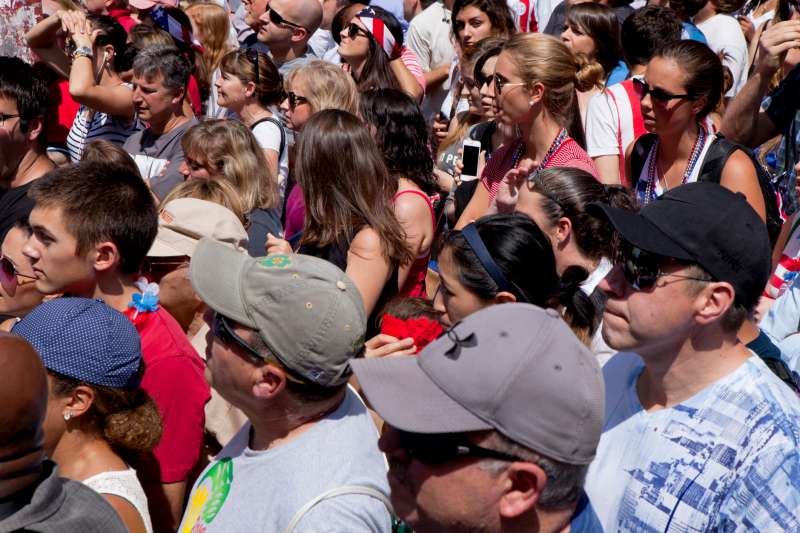
For fans and workers moving through World Cup events over the next few weeks, that kind of extreme heat could mean spending hours outdoors in conditions that are not only uncomfortable, but potentially dangerous.
READ MORE: Pa. House Dems promote bill protecting workers from extreme heat
City health officials declared a Heat Health Emergency from June 11, 11 a.m. through June 12, 8 p.m., after forecasts showed heat index values high enough to put Pennsylvanians and tourists at risk of serious illness. The declaration launched several emergency programs: a city Heatline staffed by nurses for people to call in about heat-related illnesses; extended hours at cooling centers; and home visits by special field teams. A Code Red was also declared by the Office of Homeless Services that sent outreach workers to check on people sleeping outside.
Even after the emergency ended on June 13, the city health department stressed that “it is still hot out, and that heat can still be dangerous.”
“Now is not the time to let your guard down,” said Deputy Health Commissioner James Garrow. “With all of the amazing events going on throughout the city, including the Odunde Festival and Côte d’Ivoire vs. Ecuador FIFA game, it’s important to remember that the heat can still affect you.”
Who it hits hardest
The people least able to avoid or buffer the heat are the ones most likely to get sick or die from it. Those people, as the city department of health names, include older adults, people in homes without AC, people with chronic medical conditions, pregnant women and small children, and anyone exerting themselves outdoors.
READ MORE: Some Pa. homes can’t turn to A/C to escape the heat. Why it matters
In a World Cup host city, that list of people expands to stadium and transit workers doing long shifts outside, vendors cooking over hot grills, security staff standing on pavement for hours, fans in tightly packed crowds or metal bleachers, and the players on the field. It also includes people who live in the neighborhoods around all the activity—residents in hotter, less-shaded parts of the city where a 90+ degree day feels even hotter at street level.
RELATED: Workplace heat protection legislation would be first of its kind for Pa. workers
Heat is already the leading cause of weather-related deaths in Pennsylvania and across the US, killing more people than floods, hurricanes, or winter storms. Nationally, extreme heat contributes to an average of more than 700 deaths, 9,000 hospitalizations, and 67,000 emergency-department visits every year. Between 2018 and 2022 alone, heat-related illnesses sent 6,487 Pennsylvanians to the ER and led to 1,165 hospitalizations.
It’s why state health officials keep reminding people to take breaks during the festivities.
“Drink plenty of water, find some shade outdoors, and take advantage of air conditioning whenever you can,” said Garrow. “Also, be sure to check on your elderly neighbors and loved ones to make sure they’re still doing well in the heat.”
Without these check-ins, officials describe a spectrum of heat-related illnesses ranging from heat rash, heat cramps, heat exhaustion, and heat stroke, the last of which is life-threatening.
Early symptoms like heavy sweating, muscle cramps, dizziness, headaches, and nausea are common in crowded, hot venues. Without cooling and hydration, they can progress into heat stroke. At that point, the guidance is to call 911 immediately and cool the person down while waiting for emergency personnel.
READ MORE: The Pa. natives playing for the US in the World Cup
An NPR analysis of the 2026 World Cup schedule found that more than one-third of matches across North America are at high risk for dangerously hot, humid conditions, and 67 of 104 games carry at least some heat-illness danger based on the “wet bulb globe temperature” measure used in occupational safety.
Climate scientists believe that is not a coincidence. A new analysis from Climate Central found that planet-warming carbon pollution is boosting the odds of performance-impairing heat at 97 of the 104 World Cup matches scheduled across North America. Forty-nine of those matches, nearly half, now have at least a 50% chance of seeing temperatures above 82.4°F, the threshold where researchers determine heat starts to slow players down and change how teams play.
In other words, it’s not just summer heat. It’s a pattern driven by pollution trapping more heat in the atmosphere, showing up in real time on soccer fields from Philadelphia to Guadalajara.
What the city’s doing for the heat
In a hotter, longer summer, and especially during something as intense as the World Cup, the disparity between what heat is doing and what our systems can manage is where the real danger lives.
In addition to the city’s Heat Health Emergency declaration, the department also advises people to stay indoors and out of the sun when possible, use AC, drink plenty of cold liquids, avoid alcohol and caffeine, wear loose, light clothing, never leave children or pets in vehicles, and take breaks if you have to be outside. On its website, the state Department of Health also describes different heat-related illnesses, symptoms, and how to treat them.
World Cup-specific measures were also layered on top. At Lemon Hill’s FIFA Fan Festival, for example, the city set up two large tents with fans and misters, added multiple free water stations, and placed picnic tables in shaded areas so fans have places to cool off between matches. Four “hospitality hubs” from City Hall to Lemon Hill offer shade, water, and additional misting stations from 10 a.m. to 8 p.m. to create a cooled path along the main fan corridor.
RELATED: Philadelphia hotel workers threaten to strike during World Cup
For people coming to enjoy the World Cup and Fan Festival events, the department also recommends texting CUPPHL to 888-777 for free alerts and following the Philadelphia Office of Emergency Management’s WhatsApp channel so that every Pennsylvanian, worker, and tourist can enjoy the games while the heat blares on.
READ MORE: How to stay cool in the heat wave hitting Pennsylvania — even without air conditioning