A newly introduced bill in the state House and Senate would decriminalize homelessness across Pennsylvania in response to a recent U.S. Supreme Court ruling allowing local governments to crack down on encampments.
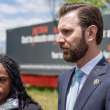
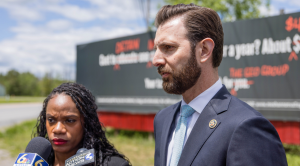
State Rep. Ismail Smith-Wade-El (D-Lancaster), said the “Shelter First Act” means that the unsheltered community won’t get arrested for trying to live in a public space when they don’t have any other option.
“Jailing our unhoused population is a losing proposition for everyone, as it will just drain state and community resources necessary to police and incarcerate the unhoused,” Smith-Wade-El said in a written statement.
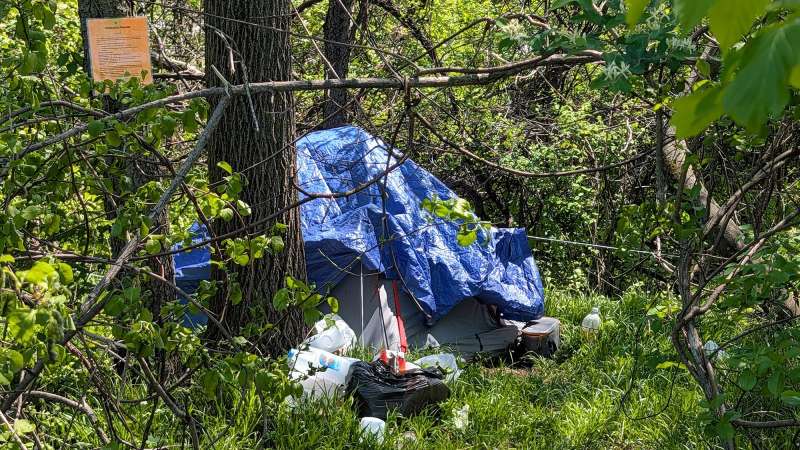
York County has always had encampments of low-income people who are forced by circumstances to live on the streets. The encampment in the woods between Bantz Park and the Codorus Creek, however, has grown in size in recent months.
Late last month, the city announced that it was going to be clearing out the encampment.
While city officials billed the sweep as a “compassionate clear-out” without providing many specifics, residents of the encampment said they fear they’re going to be rousted without any plan for where to go.
“I’m scared. I’ve been here so long,” one resident told the York Daily Record.
So far, York City officials haven’t responded to requests for comment seeking more information about the planned sweep of the encampment.
Smith-Wade-El said that there are many living in shelters who have jobs they go to but are struggling to obtain housing because of low wages, rising inflation and an affordable housing crisis, which he called a perfect storm.
He said criminalizing being unhoused isn’t solving the issue but rather exacerbating it and forcing vulnerable people into never-ending cycles of fines, arrest and incarceration.
“It’s a tax on being poor,” he said.
This legislation is meant to address the U.S. Supreme Court’s ruling that permitted cities and townships to pass ordinances that permitted criminalizing encampments set up on public property and President Donald Trump’s July 2025 executive order that called to incarcerate unsheltered people.