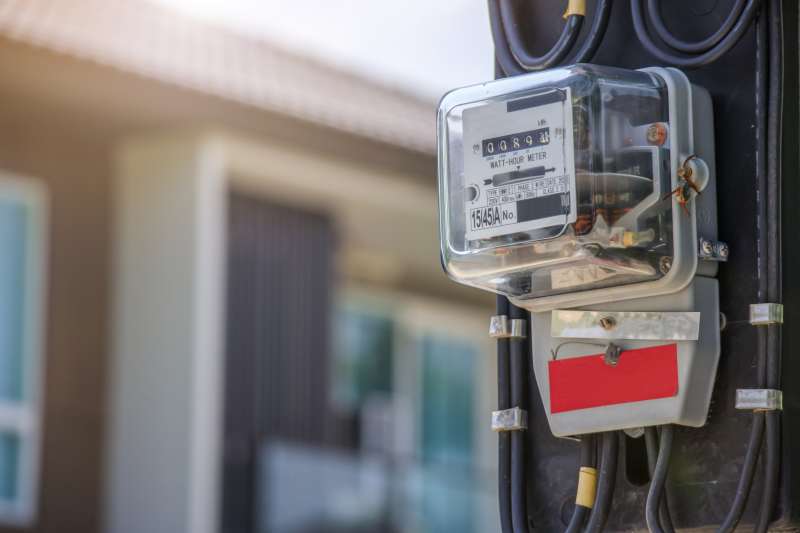
Electric bills continue to rise for Pennsylvanians as lawmakers increase their reliance on fossil fuels and struggle to rein in the region’s main supplier of electricity.
Clean energy advocates say the state’s problems can be traced back in large part to oversight of and operations at PJM, the Pennsylvania-New Jersey-Maryland Interconnection.
“The core of this problem is we’re paying too much money, and we’re getting too little for it; our energy is still unreliable, we’re still facing the potential for blackouts, and yet we’re paying more than ever for this bad service,” said Molly Parzen, executive director of the Pennsylvania Chapter for the League of Conservation Voters of Pennsylvania. “And this has been a pattern going on for a really long time.”
The need for reform at PJM
PJM is what’s known as a regional transmission organization or RTO, serving 13 states in the Midwest and mid-Atlantic regions, including the District of Columbia. The organization’s role is to oversee power production for that region, balancing the needs of consumers across a wide swath of the country. The problem is they’ve failed to adequately estimate demand for the area over the past several years. Data centers have sent those estimates into a tailspin.
Parzen said the problems at PJM didn’t crop up overnight.
“They happened over several years of institutional and systemic failures and a lack of accountability,” she said. “And this is something that’s been pointed out by a bipartisan group of governors and lawmakers in participating states.”
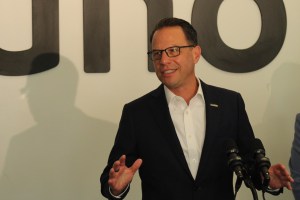
Parzen said this is the second year in a row where PJM has come up short in providing electricity to the grid, and more shortfalls are predicted. Gov. Josh Shapiro threatened to leave PJM earlier this year when discussions about data center demands went sour.
In the meantime, clean energy advocates say PJM is intentionally stalling on renewable energy projects that could reduce reliance on fossil fuels. If that pattern continues, one estimate from Synapse Energy Economics Inc. says electric customers could pay as much as 60% more on their monthly electric bills over the next 15 years.
New wind and solar projects cost 30% to 60% less than new gas plants to produce the same amount of electricity, according to a February memo on energy affordability prepared for LCV and Climate Power.
Yet, Parzen said clean energy projects could not only solve major grid problems, but also lower utility bills in the process. LCV and other clean energy advocates are calling for accountability in these project delays, citing PJM’s lengthy approval process and its backlog of requests from clean energy companies trying to connect to the grid.
“All of this is happening behind closed doors, it’s happening in the dark – these decisions that cost people billions of dollars a year happen in a way that completely lacks transparency,” Parzen said. “And we need to reform their voting structure so that public interest advocates, state lawmakers and consumers have a real say rather than letting these energy companies make all these rules.”
Shapiro, for his part, filed a complaint with the Federal Energy Regulatory Commission in 2024 over PJM’s lagging approval process for 3,300 new grid providers. The complaint was settled in 2025 and Shapiro’s administration said the move saved Pennsylvanians hundreds of dollars on their utilities each year because PJM implemented a capacity auction cap to avoid massive rate hikes.
How state government affects the outcome
Like most states, Pennsylvania has a commission regulating utilities in the state. The Pennsylvania Public Utility Commission, or PUC, is made up of five commissioners, each appointed by the governor. Currently, two sitting commissioners were appointed by Gov. Shapiro, and three were appointed by former Governor Tom Wolf, also a Democrat. However, state statute says that no more than three commissioners can be members of the same political party.
Because voters don’t have a direct say in who serves on the commission, clean energy advocates often set their sights on state lawmakers instead, the leaders steering Pennsylvania’s energy future.
“The big problem there is that you know Harrisburg is one of only a few legislatures in the country right now that is divided government, and that makes things really, really tricky,” Parzen said. “The House Democrats have really done an admirable job of passing a ton, over 30, common sense bills that have something to do with confronting our energy crisis… but Senate Republicans have repeatedly refused to even bring any of these bills up for a vote.”
Pennsylvania’s current lineup of lawmakers has made both good and bad decisions for the state’s clean energy sources. According to LCV’s scorecard looking at key policies and bills passed in the state for the 2023-2024 legislative session, most Republican legislators voted against these policies while Democrats heavily favored them both in the House and Senate.
The LCV says voters can make their voices heard in November, choosing legislators who prioritize clean energy. Energy costs are predicted to be a hot topic in the Governor’s race this year. Shapiro is running against Republican Stacy Garrity, who currently serves as State Treasurer. While Shapiro supports everything from clean energy to coal, Garrity has pushed to make better use of natural gas.
Data centers, the next frontier
Just as utility customers are juggling higher bills given the state’s increased dependence on fossil fuels, Parzen said data centers are dealing another blow, presenting new demands on the grid and a massive unknown for the state’s future as lawmakers nationwide grapple with how to regulate these fast-growing facilities.
This year, the PUC passed amendments to protect ratepayers, requiring that large energy users such as data centers pay for their own grid infrastructure improvements, instead of passing the buck.
Pennsylvania also enacted a new law this year to increase some oversight of data centers. Now, they’ll have to provide usage reports to the state detailing water consumption and predictions for future energy use.
Yet, just as Shapiro signed these new standards into law, he also renewed the state’s reliance on fossil fuels by extending operations for Conemaugh and Keystone coal-fired power plants in April. The move was touted by federal leaders. President Donald Trump—who has worked to keep a handful of coal plants across the country open using emergency orders, some say illegally—praised the decision.
Pennsylvania isn’t an outlier. The Department of Energy has issued similar emergency orders to keep coal plants running past retirement in Michigan, Indiana, Colorado, Florida, and Washington state over the past year. In Michigan, keeping the J.H. Campbell plant open past its 2025 retirement date cost the utility that owns it, Consumers Energy, $135 million through the end of last year, according to the company’s financial filings.
“And I just want to say that this decision to keep these plants open was made on Earth Day, and that was deeply disappointing,” Parzen added.
The move was aimed at stabilizing power supply to the grid, but Parzen said there are better ways to do so that don’t extend fossil fuel reliance years into the future.
“We agree that we have a huge problem and we need more energy on the grid, but we cannot completely abdicate our responsibility to build a healthier future for our planet,” she said. “Continuing to rely on this outdated fossil fuel infrastructure is not going to lower energy rates in either the short term or the long term, and it’s certainly going to harm the environment in both the short term and the long term.”
In the early 2000s, Pennsylvania enacted forward-thinking clean energy mandates, requiring that a certain percentage of grid power be derived from renewables. Now, the state ranks second to last in renewable energy growth, deriving just 4% of its power from renewables, according to data from the US Energy Information Administration.
“We’ve seen states like Texas–which you know have this legacy of pollution–they’ve actually lowered their energy prices by aggressively bringing on the wind and solar energy,” Parzen said. “But this move really stuck Pennsylvania in the past.”
RELATED: Saval, Democrats say solar panels on warehouse rooftops can save consumers money