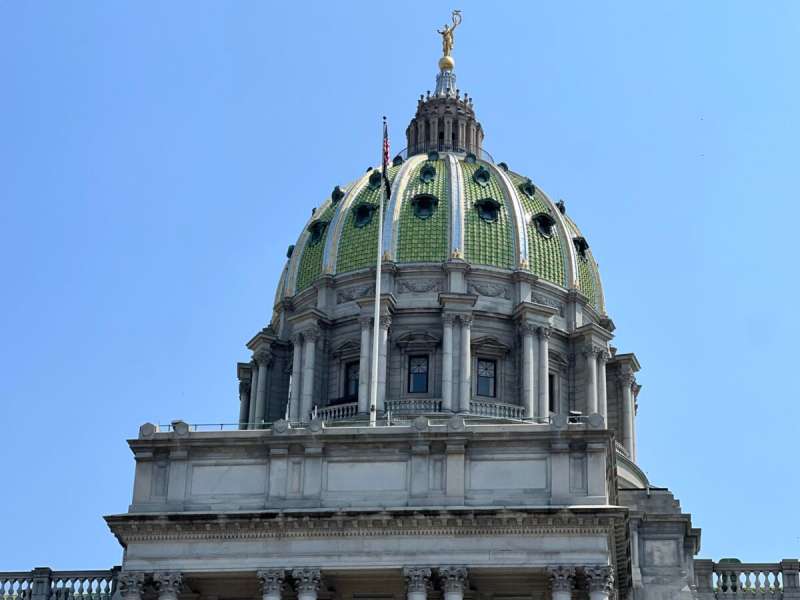
A Pennsylvania lawmaker is running a bill to set up a universal health coverage system in the commonwealth, a state-based version of federal “Medicare for all” proposals.
The single-payer model would “protect the care of thousands of Pennsylvanians who are struggling to pay their current premiums, those who have dropped their coverage and those who were previously uninsured, while also bolstering our struggling health care system,” Rep. Greg Scott, a Montgomery County Democrat, wrote in a memo to colleagues about his legislation, House Bill 2763.
But how would the state pay for this massive new health program?
Estimates for Pa. Medicare-for-all proposal
At Scott’s request, the Independent Fiscal Office, a state agency that conducts nonpartisan analysis, recently released some estimates related to the plan. Here are several takeaways:
- Pennsylvania employees would spend a projected $12.2 billion per year through a new 2.5% payroll tax proposed under the bill. This tax would replace health premiums that employees now pay, which total between $11.2 billion and $12.4 billion, and out-of-pocket medical expenses, according to the analysis.
- Keystone State employers would contribute about $36.5 billion annually under a new 7.5% payroll tax. By comparison, they’re now paying between $39.7 billion and $43.9 billion on health premiums, the IFO estimates.
- Overall, new tax revenues would bring in between $68.2 billion and $69.4 billion for the new program, according to the IFO. That figure includes revenues from self-employed individuals and taxes on unearned income. Altogether, the agency estimates statewide spending on health premiums — including private insurance and Pennie — now totals between $53.4 billion and $59.2 billion.
The universal health coverage proposal was introduced to the Pennsylvania House in September and is awaiting a hearing in a legislative committee.