Pennsylvania will feel major heat through the Fourth of July holiday. The National Weather Service was blunt in its forecast, labeling conditions as “dangerous.”
Throughout much of the state, the brutal heat and humidity is expected to drive the heat index to up to 110 degrees each day, with Thursday and Friday predicted to be the most sweltering. Sunset “will not offer any relief” as overnight temperatures remain in the mid 70s and low 80s, the NWS warned.
An extreme heat warning is in effect for Philadelphia and the entire Delaware Valley beginning Wednesday at noon and ending Saturday at 8 p.m. Extreme heat warnings for much of central Pa., NEPA, The Poconos region, and western Pa. run through Friday evening, followed by heat advisories that run through Saturday evening.
Across the state, July 4 events are being postponed or outright cancelled.
With extreme heat bearing down on us over the next few days, here’s what you need to know.
Dial 211 for information on cooling centers and other resources in your area
Pennsylvania residents can dial 211 on their phones to connect to Pennsylvania 211, a collaborative service between the United Way and several state-run agencies that provide information and referrals to essential community resources, including cooling centers for low-income families and individuals in Pennsylvania.
“If it’s too hot in your home and you need a safe, cool place to go, call 211. They can help you find a cooling center nearby,” the state Department of Health said.
Be prepared for power outages
Power outages are also possible when many customers are using energy at the same time during a heat wave. Make sure to have flashlights ready with extra batteries, cell phones and electronic devices fully charged, and a plan in place if the power goes out for an extended time.
Use battery-powered flashlights or lanterns, not candles, for emergency lighting, and keep refrigerators and freezer doors closed to avoid food spoilage if the power goes out.
Customers can report power outages to their electric utility providers:
Prepare for the heat wave
Here are other things to keep in mind ahead of this heat wave, according to state and local health and emergency preparedness officials with the American Red Cross of Greater Pennsylvania:
- Stay hydrated by drinking a cup of water every 20 minutes, even if you don’t feel thirsty. Avoid sugary, caffeinated, and alcoholic drinks. Make sure to have food, water, and medication on hand too.
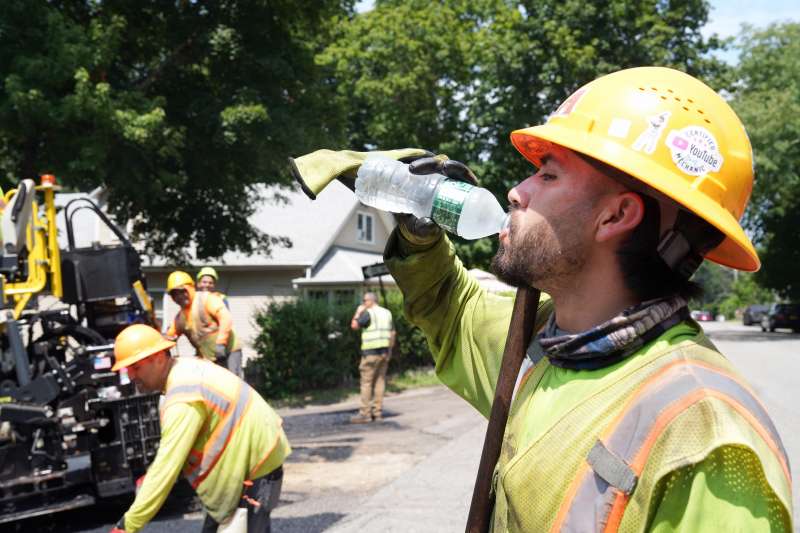
- Limit your time outside when possible, and don’t do strenuous activities during the hottest part of the day. If you must work outside in the heat, be sure to take breaks often to find some shade or cool off in an air conditioned vehicle or building.
- Wear lightweight, loose-fitting clothing, and use a cool washrag or take cool baths or showers to cool off.
- If you have a fan or air conditioning unit, make sure it works and is ready to use.
- If your home gets too hot, go somewhere with air conditioning, like a mall, a retail store, a public library, or a cooling center.
It’s also important to check on neighbors who are elderly or ill, are pregnant, have young children, or live with chronic medical conditions to make sure they are okay and have what they need to get through the heat wave, according to the American Red Cross.
Because extreme heat is the leading cause of weather-related deaths in the United States, knowing how to spot the signs of heat illness and get someone the help they need can save lives, the Red Cross says.
Information from the Associated Press and Reuters Connect via USA Today was used in this report.