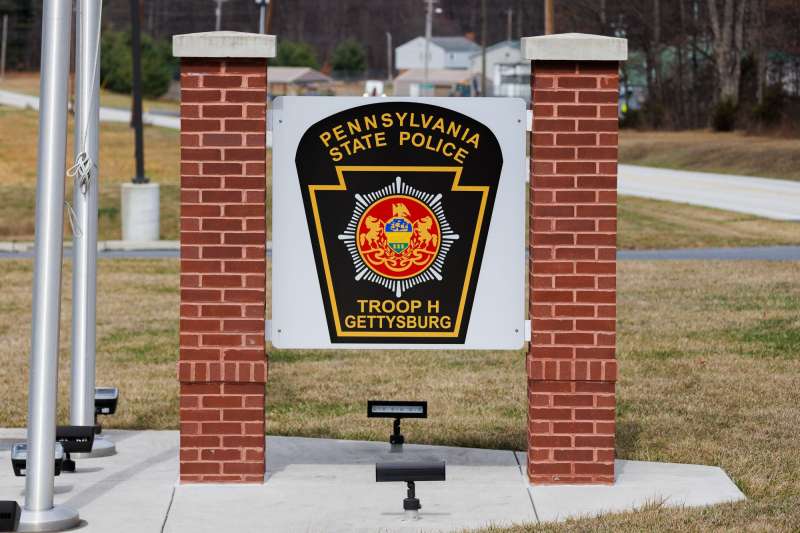
The state legislature has trimmed Gov. Josh Shapiro’s proposed spending plans each year since he took office. But funding public safety has remained a priority in Harrisburg as the Pennsylvania State Police undertakes more full-time coverage across the commonwealth.
Public safety and law enforcement spending has increased by more than $1.3 billion since 2020, and Shapiro has dedicated $63 million to training new cadet classes during his term as governor. The administration also nearly doubled funding for municipal police training in the 2024-25 budget.
But the overall number of police employees has fallen during the same time period, which a recent report from the Joint State Government Commission partially attributes to “highly publicized events,” including the death of George Floyd in Minneapolis in 2020, that have “created a nationwide negative perception of police.”
“The movement following George Floyd’s death appears to have created a broader socio-political effect than other police incidents,” the report said. “A study of several police agencies across the country found that most recorded a significant increase in resignations and retirements in the two years after George Floyd’s death.”
Police departments nationwide have been “working to overcome a five percent deficit in staffing levels” since 2020, according to the report.
At the same time, a greater number of municipalities across Pennsylvania are shuttering their own police departments, largely due to financial constraints, requiring the state police to expand coverage to more communities.
“With municipal police departments closing, the PSP is responsible for patrolling larger geographic areas and staff can frequently be spread thin or have longer response times due to the availability of officers,” the report reads.
The commission recommended continuous funding for the state police agency and the repeal of the statutory cap on the number of troopers it can employ — a proposal that the Shapiro administration supports.
Cap on number of troopers limits hiring, agency says
The statewide law enforcement agency currently employs more than 4,200 troopers out of 4,410 available positions, according to a department spokesperson.
And the cap “impacts the ability of the PSP to recruit and train new officers, as PSP must wait for vacancies to occur in order to hire additional officers,” the report states.
In a statement, Shapiro spokesperson Rosie Lapowsky urged the legislature to pass a bill repealing the cap.
The state police has begun providing full-time coverage to 21 more municipalities since 2023, bringing its statewide total to 1,325 municipalities that comprise over 80% of Pennsylvania. An additional 408 municipalities partner with the state police for part-time coverage.
Sweden Township in Potter County eliminated its local police force in 2024 after its police chief took another position, according to Debra Dehn, the township secretary.
“When he left there was him and two part-time officers. … the Supervisors decided that we would be fine without a Police department,” she wrote in an email. “Not to mention, a Police department in any township is extremely expensive.”
The township is located “less than a quarter mile” from state police barracks and now relies on state troopers, she wrote, adding that “it is working out great.”
“The municipalities that shut down their police departments, they always said it was a cost consideration,” said former state Rep. Mike Sturla, a Democrat who represented Lancaster County for 34 years. “They couldn’t afford to do it without raising taxes.”
Should municipalities be charged?
Some state legislators are continuing to weigh if and how to charge municipalities for their increasing reliance on state police coverage — a debate that spans more than 30 years.
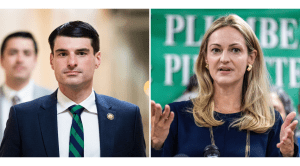
Rep. Justin Fleming (D-Dauphin) represents several districts that all have their own police forces. His constituents pay taxes to fund those departments and the state’s Motor License Fund, which supports the state police.
“It’s just patently unfair that the folks I represent are paying twice when others are getting a free ride,” he said. “It really is a fundamental issue of fairness.”
In March, Fleming introduced legislation to charge municipalities an annual fee for state police coverage. Under his proposal, municipalities that require full-time state police coverage would be charged more than those that require part-time coverage, and municipalities that independently support local or regional police forces would be exempt.
Fleming is not the first lawmaker to pursue a municipal police service fee. Republican Gov. Tom Ridge first introduced a municipality police fee in 1995, and Democratic Gov. Tom Wolf included similar language in three of his four proposed state budgets. The fee never made it into any of the final spending plans.
Sturla also championed a service fee during his time in office.
“I was not against the police, I was just saying somebody needed to pay for it other than the people that were already paying for their own police protection,” he said. “It never quite got as far as I wanted it to because members were afraid to tell municipalities that they needed to pay for it.”
Fleming specified that any revenue from a municipality fee would go directly back to the state police, allowing them to investigate more cases, hire more troopers, and meet their financial priorities. However, he said the proposal hasn’t garnered much support from the agency or other lawmakers, and “proposing a new fee or tax on folks is not generally popular.”
Shapiro’s office did not comment on whether he supports the initiative, writing that it will monitor the proposal as it moves through the legislature.
“My intention is not to make the state police a political football,” Fleming said. “It’s really just to carve out a fair solution to all parties involved. Sometimes you have to do unpopular things to stand on principle.”