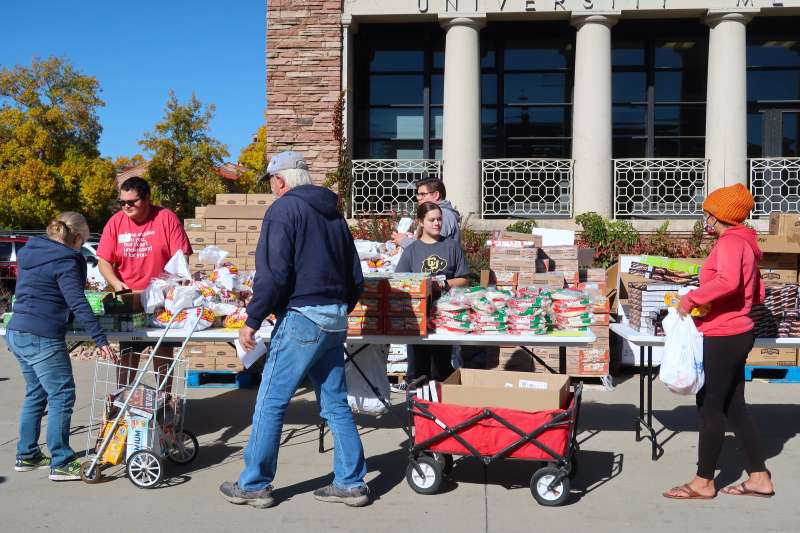
The shelves at Pittsburgh Arlington PreK-8 hold the kind of food that doesn’t spoil: peanut butter, canned vegetables, ramen, and boxed macaroni and cheese.
The school sits in a food desert, and nearly 9 in 10 of its students are economically disadvantaged. Staff opened the pantry last November, as more children were coming to school hungry and federal changes to the Supplemental Nutrition Assistance Program (SNAP, commonly called Food Stamps) loomed. By the end of the last school year, the pantry had given out about 20,000 pounds of food. Principal Crystal Caldwell estimates more than half of Arlington’s students have used it, WESA reported.
Erica Wahid, who has a second grader at Arlington, has struggled to get SNAP benefits. She told WESA she appreciates that the school “is thinking about the whole family.”
Schools like Arlington are absorbing a decision made by lawmakers in Washington.
Nearly 68,000 fewer Pennsylvania children are getting SNAP in September than in July 2025, after President Donald Trump signed the budget law Republicans called the One Big Beautiful Bill Act (OBBBA). Statewide, about 239,000 fewer people get benefits, a 12% drop according to state data compiled by the Center on Budget and Policy Priorities.
Despite the cuts, the need hasn’t gone away.
The Central Pennsylvania Food Bank serves about 270,000 people a month across 27 counties. The Greater Pittsburgh Community Food Bank distributed a record 53 million meals in fiscal year 2025, up from 48 million the year prior. Over the past year, the number of people using the resource in Greene County rose 40 percent.
In Philadelphia, the Feast of Justice pantry has four times the number of registered households that they’re able to accommodate each month, the Rev. Patricia Neale told 6abc.
Food banks say they can’t make up the difference. For every meal they provide, SNAP provides nine, according to the Greater Pittsburgh Community Food Bank.
Julie Bancroft, CEO of Feeding Pennsylvania, told state lawmakers in July that more than half a million Pennsylvania children are food insecure, almost 1 in 5. That, she said, “obviously impacts their ability to learn and grow.”
Research backs up what educators describe. A Duke University study of more than 148,000 North Carolina students on SNAP found their reading and math scores rose and fell with how recently their family’s benefits had arrived.
At Pittsburgh’s Morrow K-8, which opened its own pantry in September, the shelves have been cleaned out nearly every week. Middle school counselor Robert White told WESA that when kids aren’t hungry, they “show up and they perform well.”
In Pennsylvania, being on SNAP also matters at school. Children in SNAP households are automatically certified for free meals, with no application. Those students also count toward the threshold that lets high-poverty schools feed every child for free.
When a family falls off SNAP, the child can fall off that list too.
A new US Department of Agriculture proposal, released Nov. 10, would narrow one of the main routes families use to qualify automatically. The agency’s own analysis warns it could strain universal school meal programs in Pennsylvania, Colorado, and New Mexico, Newsweek reported. Sen. John Fetterman helped spearhead a letter from 11 Democratic senators opposing it. Public comment is open through Dec. 10.
Pennsylvania already pays for free breakfast for its roughly 1.7 million students. Lunch is a different story.
Schools and the state brace for what’s next
The Greater Pittsburgh Food Bank now partners with pantries in 38 schools. Seven of them opened this year.
The state is picking up new costs, too. Since Oct. 1, Pennsylvania has paid 75 percent of the cost of running SNAP, up from half. Starting in October 2027, it may also have to cover part of the benefits itself, depending on its error rate, a measure of over-and underpayments. At last year’s 9.2 percent rate, the Center on Budget and Policy Priorities puts that bill at about $410 million a year.
Supporters of the law, including U.S. Rep. Glenn Thompson, a Republican from north-central Pennsylvania who chairs the House Agriculture Committee, have called the state’s error rate unacceptable and argued the penalty pushes states to run tighter programs.
Some state lawmakers want Pennsylvania to step in where it can. State Rep. Emily Kinkead and state Sen. Lindsey Williams, both Allegheny County Democrats, have introduced companion bills, House Bill 180 and Senate Bill 180, that would make school lunch free for every student. The Senate version estimated the cost at about $360 million a year. Neither has moved out of committee.
Kinkead, who chairs the House side of the legislature’s Hunger Caucus, has said the state can’t fully fill the hole left by the federal cuts on its own.
Back at Morrow, White said donations should keep the pantry running through the end of the school year.
What happens after June is an open question.