Legislators from York County are once again pushing a proposal to eliminate school property taxes by increasing sales and personal income taxes, reigniting a decades-old debate over how Pennsylvania should fund public education.
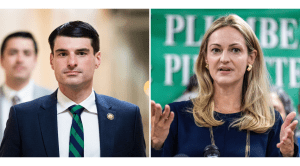
Under the latest proposal introduced by York County Republican state Sen. Dawn Keefer and supported by state Rep. Wendy Fink, school property taxes would be eliminated statewide. To make up the revenue shortfall, Pennsylvania’s sales tax rate would jump from 6% to 8%, and currently exempt items such as clothing, candy and gum would face a 2% tax.
The plan would also raise the personal income tax rate from 3.07% to 4.95%. Further, it would tax certain retirement income.
Neither Fink nor Keefer responded to requests for comment about their legislation.
Supporters say the shift would offer direct relief to homeowners, particularly retirees living on fixed incomes. “It’s time to pass this bill and strengthen Pennsylvania’s economy for generations,” Fink said in a press release in March.
Pennsylvania politicians have pursued efforts to eliminate or reduce school property taxes for decades. Still, many of those efforts have been sunk by criticism that raising sales and income taxes would disproportionately affect lower-income residents, who are least able to shoulder the additional burden. Further, the property tax benefits would have limited upside for renters, who are also disproportionately low-income.
“When something sounds too good to be true, it usually is,” warned Chris Lilienthal, spokesman for the Pennsylvania State Education Association, the labor union that represents 178,000 educators statewide.
Lilienthal cautioned that major changes to the tax structure could hurt working families and local schools.
Joel Sears, a former York Suburban School Board member and vocal supporter of efforts to eliminate school property taxes, said he believes the latest proposal works but acknowledged not everyone will like it.
Further, he doesn’t think such property tax elimination bills are likely to pass.
“We’re going to talk them to death,” Sears said. “We’re never going to give it a chance.”
While another push to end school property taxes happens, no one has figured out how to close the “adequacy gap” in school districts, which a judge ruled unconstitutional in 2023. This July, Gov. Josh Shapiro signed a $50.8 billion budget that increased education funding by $900 million but left some larger policy questions unanswered.
Sears pointed out that while the state is giving certain schools more money to fix the gap, nothing has been done to change the larger school funding system.
“All we’ve done is throw more money at it,” he said.
Pennsylvania currently ranks 12th highest in the nation in property taxes paid by residents, according to the nonprofit Tax Foundation. In 2024, the median property tax for York County was $4,006 with an effective tax rate of 1.54%.
According to the most recent reporting by the state’s Independent Fiscal Office, taxpayers statewide paid $17.9 billion in school property taxes in the 2024-25 school year. That’s projected to increase to $19.6 billion in the 2027-28 school year.
Previous efforts to curb property taxes included a 1997 constitutional amendment establishing homestead exemptions, the legalization of casino gambling in the early 2000s and Act 1 in 2006, which capped school district tax increases without voter approval. A succession of bills similar to Keefer’s have failed to pass the Legislature in recent years.
“These latest proposals are no different,” Lilienthal said. “They would eliminate property taxes on homeowners, landlords and businesses by shifting to higher sales and income taxes, including new taxes on retirement income.”
Opponents of the latest legislation argue that eliminating property taxes shifts the tax burden onto lower-income residents who spend a larger percentage of their earnings on sales and income taxes.
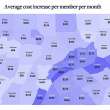
An IFO analysis of the most recent proposal found that residents earning between $50,000 and $100,000 would see an average tax increase of $183 per person.
Critics also contend that the plan grants substantial relief to large corporations while removing local oversight of school budgets.
“I don’t think that this is something that the proponents of property tax elimination actually lay out in an honest way for their constituents,” said Susan Spicka, executive director of advocacy organization Education Voters PA. “This would make it so that gigantic corporations, warehouses, data centers, they wouldn’t have to pay any property taxes anymore.”
Spicka added that shifting funding control to Harrisburg could create severe financial disruptions if state budget approvals are delayed.
“They should have local control over what’s happening in their school districts, how dollars are raised, how dollars are spent,” she said.
Recent budget impasses in Harrisburg have adversely affected local school districts in recent years, with schools having to borrow money, delay spending or cut programs as the Senate, House and the governor’s office negotiated.
Local school leaders similarly also expressed doubt about state-controlled funding solutions. At a November 2025 meeting while explaining the results of a state budget that passed late, York Suburban School District Superintendent Scott Krauser noted that state support falls far short of operational costs, pointing out that special education budget costs are just under $12 million while state funding remains under $2 million.
“The support that we’re getting from the commonwealth is not keeping pace with the costs of supporting our special education students,” Krauser said about state funding.
York Suburban School Board Vice President Richard Robinson has repeatedly commented on the tax change proposals.
“My confidence in that kind of effort is questionable,” Robinson said, adding, “In my opinion, there are more effective ways to provide tax relief for homeowners than taxing retirement income.”
In addition to Keefer’s proposal, Republican state Sens. Chris Gebhard and Doug Mastriano have introduced a proposed constitutional amendment that would ban schools from collecting property taxes starting July 1, 2029. To reach the ballot for voter approval, the measure must pass the General Assembly in two consecutive two-year legislative sessions.
Education advocates maintain that dismantling property taxes risks undoing recent progress made toward equitable school funding.
“This is the last thing our schools need when the commonwealth has made such good progress over the past two years,” Lilienthal said, “beginning to address funding inequities and putting every student on a more equal footing.”
Sears said the state can’t just eliminate the tax and tell the schools to “tough it out.” Those taxes make up a big chunk of the districts’ budgets. Schools need to be able to balance their budgets, he said, joking that the world’s biggest car wash every Saturday won’t do it.
He also pointed out that York County — like many counties across Pennsylvania — hasn’t performed a countywide reassessment since 2006. Doing so wouldn’t reduce the overall tax burden, he said, but it would more fairly assess those taxes.
While Sears doesn’t think school property taxes will be eliminated anytime soon, he does think the state will eventually find solutions to the larger structural problems in its school funding regime.
“I’m optimistic,” he said. “I think there’s one out there, but it won’t be asked before I die.”
Town halls planned
Keefer and Fink have scheduled several town halls to discuss their proposal:
- 5 to 7 p.m. Aug. 12 at Hickory Corners Fire Company at 1124 Hickory Road, Dalmatia
- 6:30 to 8:30 p.m. Aug. 20 at IronSpire Complex at 2800 N. Reading Road, Adamstown