Pennsylvania’s opioid deaths have dropped in recent years, and rates of overdose-related emergency room visits have receded from their pre-pandemic heights, state health records show.
And yet, data recently released by a commonwealth agency shows hospitalizations tied to opioid use have been climbing in the past couple years, jumping by about 18% from 2024 to 2025. The increase is even more dramatic in Philadelphia, where the totals spiked by nearly a third.
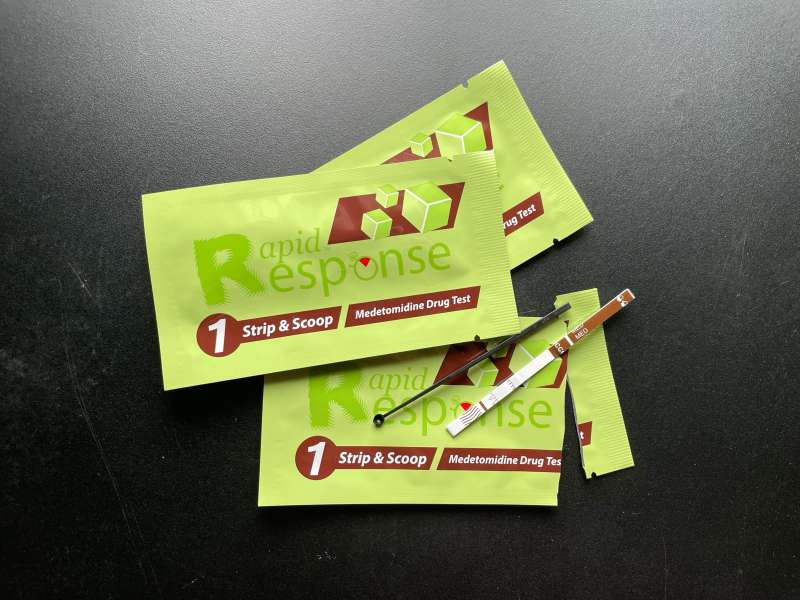
Experts aren’t surprised by these apparently conflicting data points, saying they likely reflect growth in the use of medetomidine, a veterinary tranquilizer that’s now lacing much of the commonwealth’s fentanyl supply. A powerful sedative, the drug is not only landing people in the emergency room but also triggering dangerous withdrawal symptoms that can require extended treatment in intensive care units.
“I’ve taken care of terrible overdoses and terrible withdrawal for two decades, and I’ve never seen a withdrawal syndrome like happens with medetomidine,” said Dr. Michael Lynch, senior medical director of substance use disorder services at UPMC Health Plan and medical director of the Pittsburgh Poison Center.
Positioned inside the nation’s epicenter for medetomidine use, Pennsylvania physicians say they’ve had to develop their own playbook for managing these cases.
People who show up in hospitals under the influence of medetomidine are sometimes unconscious, and their heart rate and blood pressure might have dropped, experts say. Those effects typically improve with time, Lynch said, but are soon followed by violent withdrawal symptoms that can keep people in the hospital for up to a week.
So while the commonwealth’s emergency rooms aren’t seeing a flood of new overdose cases, people who are showing up because of opioid use are often staying longer and need a higher degree of care, said Carla Sofronski, co-founder and executive director of the Pennsylvania Harm Reduction Network.
“I got sober at 26, and they used to say to me you could never die from withdrawing from heroin,” she said. “But now, that’s not true.”
Across the commonwealth, opioid use-related hospitalizations shot up from roughly 31,600 in 2024 to 37,300 the next year, according to data released by the Pennsylvania Health Care Cost Containment Council (PHC4), a state agency tasked with collecting health statistics.
The 2025 totals are the highest on record in the seven years since the PHC4 began publicly reporting this data. No other year has surpassed 32,000 opioid use-related hospitalizations, according to the agency.
Why is medetomidine showing up in the drug supply?
Amid the national battle on illegal fentanyl, overdose deaths in Pennsylvania have dropped, falling from a high of 5,429 in 2017 to 2,810 in 2025, according to state health data.
Still, as the composition of illegal street drugs keeps shifting, health and treatment systems face ever-changing challenges. A sequence of adulterants have made their way into the fentanyl supply, including xylazine, a veterinary tranquilizer that experts say heightens the effect of the opioid.
Then, after the commonwealth added xylazine to its schedule of controlled substances in 2024, medetomidine, a sedative up to 200 times as powerful, started to infiltrate the drug supply, Sofronski said.
From April through June, medetomidine showed up in roughly 81% of suspected dope samples tested through Philadelphia’s drug checking program.
The arrival of this street drug transformed what emergency rooms were seeing.
When someone shows up suffering from an apparent opioid overdose, health providers can still administer the medication naloxone to restore normal breathing. However, many patients are no longer waking up when they receive this overdose-reversal drug, remaining under the tranquilizing influence of medetomidine.
The sedation generally wears off on its own, with physicians monitoring people as they come back to consciousness, Lynch said.
But violent withdrawals — which can start within 4 hours to 6 hours of a person’s most recent use — are following close behind and demand continued care.
In other cases, the withdrawals are what’s bringing patients to the hospital in the first place. People have arrived in the emergency room after symptoms arrived while they were riding a city bus, in police custody or trying to sleep.
While the opioid withdrawal process is uncomfortable, medical providers don’t view it as especially dangerous, said Dr. Kory London, director of clinical operations at the Jefferson Methodist Hospital emergency room in Philadelphia. People can typically leave the hospital with a prescription to help them treat their opioid dependence and continue recovery in an outpatient setting or in the behavioral health system, he said.
Medetomidine withdrawal, on the other hand, can cause severe vomiting, a racing heart rate, confusion and delirium and spiking blood pressure. In the worst cases, physicians say, patients have suffered from heart failure, a stroke or organ damage.
London said doctors have seen young people develop heart problems or end up on hemodialysis from kidney failure because of the damage done to their bodies during medetomidine withdrawal.
“This isn’t something that’s safe for patients to kind of tough out at home,” he said.
People must often stay in the intensive care unit for several days as they undergo withdrawal, but some remain for about a week, Lynch said.
How are Pennsylvania hospitals affected?
This wave of medetomidine has placed a strain on hospitals around the commonwealth, experts say, particularly in Philadelphia and Pittsburgh, where the sedative is most abundant.
In an analysis of two Philadelphia hospitals, London and other researchers found that median quarterly ICU charges related to opioid withdrawal shot up from $5.6 million when fentanyl alone dominated the local drug supply to $15.3 million after medetomidine surged onto the market.
The study found a corresponding jump in the median number of ICU admissions, which rose from 18 patients in opioid withdrawal per quarter to 64. Researchers concluded these shifts present a “substantial public health challenge that may require systematic changes to health system resource allocation and withdrawal protocols.”
“The need for additional ICU capacity is a real challenge, a daunting one,” London said.
Over a couple of weeks in late August, for instance, Allegheny County emergency rooms were suddenly inundated with 139 patients suffering from withdrawal symptoms. A statewide health alert circulated in response to the spike said it was unclear what caused it, but Sofronski suspects the culprit was a large release of diluted drugs that sent users around the county into withdrawal nearly simultaneously.
“That is the scary thing, is that if we had a statewide problem of everybody going into withdrawal at the same time, we do not in any way, shape or form have the capacity to handle that in our hospital systems,” she said.
For that reason, harm reduction groups have discouraged lawmakers from scheduling the substance, predicting a “widespread medical crisis” if medetomidine suddenly disappears from the drug supply.
So far, the increased medical need seems most noticeable in big cities, where checking programs show the sedative is common in the drug supply. Rates for opioid-related hospitalization are well above the statewide average in Allegheny County and nearly triple this average in Philadelphia, the PHC4 data shows.
It’s difficult to gauge the substance’s prevalence in rural areas, where drug checking programs are less robust, Lynch said.
Lynch and London say their hospital systems have made adjustments to absorb the emerging trend; after learning that the methods used to treat xylazine withdrawal don’t work well with medetomidine, they’ve developed different approaches.
These interventions aren’t necessarily intuitive for physicians unfamiliar with medetomidine withdrawal cases, London said, adding that patients can require “gargantuan” doses of medication to control their symptoms.
So physicians in Pennsylvania’s largest cities have been doing their best to share information with providers elsewhere, including in suburban and rural communities where Sofronski worries hospitals might not be as aware of medetomidine treatments.
“This is a novel crisis,” London said. “This is an entirely new cohort of patients who had never existed before.”