On the battlefield, military doctors don’t accompany their units to the frontlines. Someone with a specialized certification isn’t the one patching wounds or monitoring the health of their fellow soldiers, sailors, airmen or Marines.
That responsibility lies with a Navy Hospital Corpsman, Army Medic or another equivalent role — an individual whose training spans from emergency interventions and assisting surgeons to sanitation supervision and clinic vaccinations.
While there is no civilian version of a corpsman or medic, Pennsylvania’s working to create one.
Similar to how corpsmen and medics triage care and stabilize patients who can’t immediately see a doctor, a new initiative would deploy Primary Care Medics under the supervision of licensed physicians to improve primary care in the commonwealth’s rural communities.
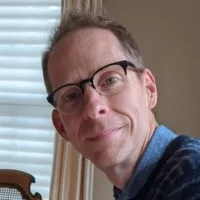
“The idea goes back to, ‘Can we take what the military does, and the concept of maybe a corpsmen or an Army medic, and can we transform that for civilian care?’” said Mark Stephens, who served as a family physician with the US Navy for more than 20 years.
Stephens is part of the Penn State University team spearheading the initiative and is an associate dean for the school’s College of Medicine.
He didn’t envision the same high-stress conditions as their military counterparts, but saw the medics initiative as a way to close some of the healthcare access gaps in the commonwealth. Similar to corpsmen deployed abroad, a stateside medic would meet patients where they are and work only with the tools that they (or their car) can carry.
State officials and other stakeholders find the initiative so enticing that they’ve committed to spending some of the commonwealth’s future allotment of rural health dollars to make it a reality.
“It is really challenging to attract and retain healthcare providers in medically underserved areas, whether it’s very inner city or in rural communities,” said Lisa Davis, the director of the Pennsylvania Office of Rural Health. “When you’re out in a rural community, in some respects, you’re the cradle-to-grave physician. And that can be either exhilarating or it can be really frightening.”
Kickstarting the model with state rural health dollars
The concept of medics — or something like them — has been around for over a decade, and Stephens is quick to credit others for kickstarting the discussion and securing funding.
“The conversations had been smoldering for years and years,” he continued. “The accelerant really was, (Pennsylvania Secretary of the Department of Health Val Arkoosh) saying, ‘Hey, this looks promising.’”
Under the workforce portion of the state’s application for the Rural Health Transformation Plan, the “in development” Primary Care Medic initiative is described as a way to “provide community-integrated primary and preventative care” in rural areas.
“Currently, rural communities have less than half as many primary care providers per 1,000 residents as their urban counterparts. This disparity is compounded by transportation barriers, geographic isolation, an aging population, and the closure of local medical facilities,” Arkoosh said in a statement to the Capital-Star.
The millions coming to the commonwealth through the Rural Health Transformation Plan (RHTP) presents an opportunity to grow the number of rural healthcare providers in the commonwealth.
“The innovative (PCM) training program will create and integrate a new certificate-level health care role … to deliver high-quality primary and preventive care under supervision of a licensed provider,” Arkoosh continued. “This initiative will help us expand the rural primary care workforce while tailoring our services to meet rural Pennsylvania’s needs.”
Federal authorities can claw back funding if Pennsylvania doesn’t achieve its outlined goals. Rather than shoring up existing resources, like hospitals at risk of closure or plugging holes in Medicaid budgets, RHTP dollars are meant to create something new.
“(The RHTP is) rethinking how care is delivered,” said Davis, about the emphasis on new projects. “And the Primary Care Medic program is all about coming out into communities.”
Some details still need to be finalized, but those federal dollars will be critical to make the vision a reality. The state could receive somewhere around $1 billion in federal funding, about $2 million of which could be earmarked for medics.
The state application pitches a pilot program embedded in the state’s Federal Qualified Health Center network sometime in 2028, followed by two more years of recruitment with training through Penn State Extension sites.
How will they fit in the greater healthcare ecosystem?
Medics aren’t the first attempt to shore up primary healthcare — both physician assistants and nurse practitioners have been pitched as ways to extend the reach of a shrinking workforce. In Pennsylvania, these providers must work under an agreement with a physician.
But most physician assistants specialize, just like doctors, in fields that pay more money — like emergency medicine or surgery — over family medicine. Even fewer of these healthcare professionals choose to practice in rural communities.
Traditionally, physicians, physician assistants and nurse practitioners don’t go out into the field, which is the vision for medics. Community Health Workers and paramedics might spend more time away from brick-and-mortar clinics, but don’t necessarily have the desired clinical training for long-term disease management.
“A community health worker has strengths — they’re known in the community. They know how to navigate the community. They know the resources available within the community. As a rule, they’re pretty good communicators, so we want that as a fundamental skill set,” said Stephens. “What community health workers can’t do is medication reconciliation, point-of-care testing, simple, algorithm-based clinical care.”
With an eye on rural areas, where doctors are few and spread out, a medic would be able to bring care closer to home.
“The PC-Medic is sort of the sweet spot in-between,” said Stephens. “I need to really emphasize, the PC-Medic is not designed to replace anything, it’s designed to complement everything.”
Ideally, a medic equipped with a tablet would be tasked with home visits, facilitating telehealth calls if something is beyond their level of expertise.
“We definitely want to avoid the situation where any Primary Care Medic feels like they need to or should do more than they are actually able to do. We want to be really careful about boundaries,” said Stephens.
Stephens described most of the conditions treated by primary care providers as “completely predictable,” such as heart disease or diabetes. With the latter, which impacts an estimated 11.3% of adult Pennsylvanians, medics could assist patients with management, teaching someone how to measure or monitor their blood sugar and talking to them about physical activity and nutrition.
Identifying that as a goal, curriculum writers work backwards to determine how to teach someone that skillset. But the role will touch on four different health focuses alongside primary health: oral health, maternity care or reproductive health, behavioral health and aging.
Ideal recruits
The initiative not only takes its inspiration from corpsmen, but leaders like Stephens want to recruit them after they’ve been discharged from military service. Ideally, after working for a few years as a stateside medic, they’d “catch the fire” and decide to go back to school for further training, he added.
“Sadly, many veterans who are trained in the medical or healthcare space, their skills aren’t transferrable when they get to the civilian world,” said Stephens.
Some retiring corpsmen and medics train to become Emergency Medical Technicians (EMTs) or paramedics, the closest equivalent, but others struggle to join the civilian healthcare workforce because their service isn’t recognized as professional experience.
“Medics and Hospital Corpsmen are not licensed or certified, making transferring into employment in the community difficult,” begins a 2023 doctoral project on the subject, which estimated that the Department of Defense released roughly 2,000 medics from service annually.
“During their military service, these highly skilled medics perform many invasive procedures and emergency care … However, the few civilian opportunities available for medics are low-wage jobs,” the paper continues.
But former members of the military aren’t the only potential pool of candidates. There will also be an emphasis on rural adults — whether they’re already in the medical field or just finishing high school — who already live in areas with healthcare shortages.
“I look at it as either an on-ramp to a healthcare career or an off-ramp,” said Stephens. “The on-ramp would be somebody at the community college level or somebody looking to upskill from a medical assistant or community health worker role. An off-ramp would be someone like me, who isn’t in this game forever, but I want to serve my community for another five or six years.”
“It doesn’t just have to be for young folks … this is not a terminal place,” he continued.