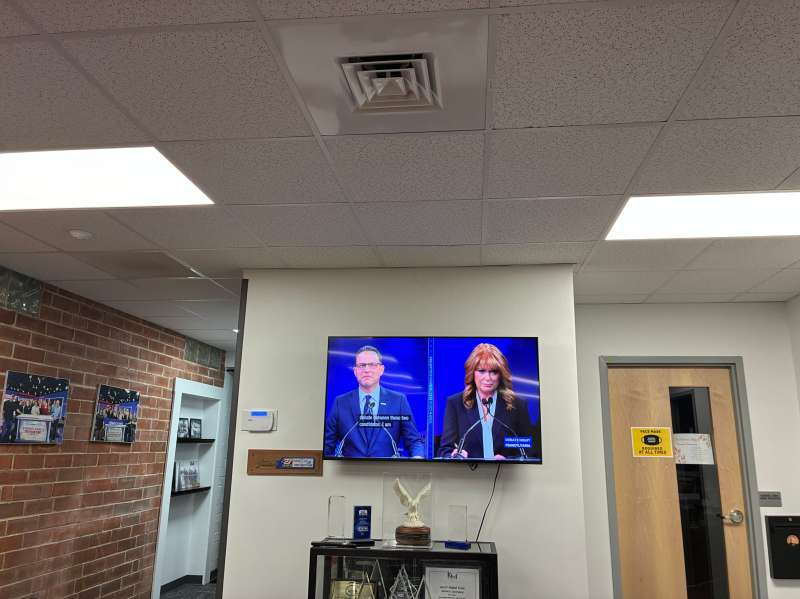
Pennsylvania’s only gubernatorial debate between Democratic Gov. Josh Shapiro and Republican state Treasurer Stacy Garrity stayed civil and mostly cordial for the hour it lasted Oct. 7 inside TV station abc27’s studio.
Shapiro, 53, is seeking a second term as governor. Formerly Pennsylvania’s attorney general, a state representative and Montgomery County commissioner, Shapiro has spent more than 20 years in public office.
Garrity, 62, is a retired U.S. Army Reserve officer and former vice president of Global Tungsten & Powders, a manufacturing company based in Towanda. She is in her second term as treasurer.
Both candidates left the studio without speaking to reporters who were assembled in a separate room.
What did they say about issues facing Pennsylvanians while on stage?
Shapiro and Garrity on data centers
Shapiro mostly touted his administration’s recently unveiled guardrails surrounding data centers, the behemoth tech campuses with warehouses of computers used to power the boom in artificial intelligence.
These include the centers bringing their own electricity and paying for costs associated with it, being transparent with local governments and residents about their plans and protecting the environment.
Shapiro also said that, without local support, the centers cannot be built.
“If a local community does not want a data center put there, it won’t be built there,” Shapiro said, adding that the state would not even consider permitting it.
Garrity, who has proposed a moratorium on building data centers, said local government officials she has spoken with are not opposed to them, but want time to update their zoning.
When asked how long to pause development, Garrity said, “As long as it takes. I come from the private sector so I think you could get it done very quickly.”
Garrity and Shapiro on skill games
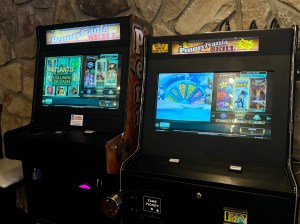
The popular gaming devices in bars, restaurants and gas stations have become a political football since the state’s Supreme Court gave the Legislature until Oct. 13 to figure out a way to regulate them. Without that, they would become illegal and could be confiscated by Pennsylvania State Police.
Shapiro stuck by his budget proposal, which called for taxing skill games at 52%, the same rate as slot machines in the state’s casinos. That did not make it into the state’s budget.
“It would not advantage one type over another,” Shapiro said during the debate.
Garrity criticized Shapiro for wanting to tax veterans social clubs and said she supports a flat $500 per month charge on the machines. She predicted that would bring in around $300 million in revenue.
Garrity and Shapiro on the state budget
Pennsylvania’s routinely late budget came in at $50.8 billion this year. It did not include any of Shapiro’s political wish-list items like hiking the state’s minimum wage and legalizing recreational marijuana.
To balance the spending, officials did not tap the state’s $8 billion rainy day fund, basically a savings account intended for use in economic downturns or financial disasters.
Garrity said the budget surplus is less today than when Shapiro took office.
“When you come from the private sector, you can’t just throw more money at something and think you’ll get a different result,” Garrity said. “You have to roll up your sleeves and show real leadership, which he has decided to not show.”
Shapiro touted the state’s 5.4% economic growth rate along with recently reported revenues that came in higher than anticipated.
Pa. governor candidates on publicly funded sports stadiums
When asked about the future of the Pittsburgh Steelers and Philadelphia Eagles remaining in their respective cities, both candidates erred on the side of not using public money to build new stadiums.
“I don’t think we need to be giving taxpayer dollars to billionaire owners,” Garrity said. “If they came and had a proposal and it’s win-win, I would be open to it. When Pennsylvanians are hurting, I don’t think billionaire owners need Pennsylvania tax dollars to build new stadiums.”
Shapiro said the new stadium proposed for the 76ers and Flyers in Philadelphia will not get any money from the state. And he would not want to spend tax dollars to support any of the teams’ owners until he hears their plans.
“On my watch, the Steelers will remain in Pittsburgh and the Eagles will remain in Philadelphia. Period,” Shapiro said. “We can do that without providing tax dollars in order to make that happen.”