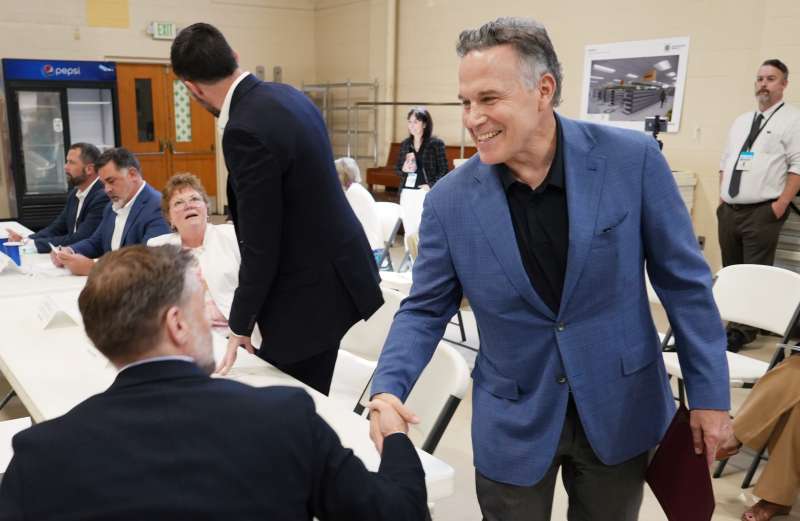
US Sen. Dave McCormick of Pennsylvania lamented the GOP’s recent historic midterm election losses, which produced the biggest win for either party in 50 years, saying “we got thumped,” and that Republicans need to learn from their mistakes.
During a call with local media outlets across the state on Thursday, Nov. 19, McCormick spoke on a range of issues, from efforts to bring a new space academy to Pittsburgh, to the return of the Army-Navy college football game to Philadelphia. He was also candid about why Democrats were able to flip more than 40 House seats and win every Senate race that was considered a tossup heading into the Nov. 3 election. Democrats will hold 56 seats to the GOP’s 44.
“The big message that came out is, I think, voters didn’t feel like we were focused enough on them and the things that mattered most to them,” said McCormick, Pennsylvania’s junior senator, who was elected in 2024. “We were talking about a lot of things. And, I said this many times publicly, we had a really great track record to run on: closing the border, reducing fentanyl deaths by 60%, historic lows in violent crime, putting more money back in the pockets of Pennsylvania families through tax cuts and no tax on tips, funding school choice.
“I thought there was a lot to talk about,” he said, “but the thing that we didn’t talk enough about was what they were feeling on gas prices, what they were feeling on health care and what they were feeling on housing.”
Voters, he said, don’t expect lawmakers to “fix everything right away,” but they felt Republicans weren’t focused “on the things that they were feeling were most important.”
Moments earlier, McCormick, after being asked about Gov. Josh Shapiro’s plan to raise the state’s minimum wage to $15 an hour, said he was open-minded about the idea but only because most employers are paying more.
“I don’t think that’s going to affect the income of working families,” he said. “I think the thing that we really need to do that’s going to change the landscape is bring down gas prices. We got that message loud and clear in the election. We need to bring down housing prices. We need to bring down healthcare prices. So, the affordability thing is a real thing.”
McCormick wasn’t on the ballot earlier this month and won’t be until 2030 when his six-year term ends. However, he said he heard from Pennsylvanians in the run-up to the election about another issue.
“The second thing is, sort of this sense of Washington and the people that are serving them are focused on themselves and not enough on them,” he said. “I heard this across Pennsylvania, this question of insider trading and stock bans and all this stuff. I have supported a whole series of legislation to make sure that people don’t feel like there’s corruption in public life, where the people in public service and public life and elected officers are benefiting from things that the average person on the ground doesn’t have access to.”
McCormick said he and fellow Republicans, while they still have their majorities in the House and Senate, are focused on approving permitting reform legislation, confirming President Donald Trump’s judicial nominees and passing a reconciliation bill to fund the US military during the brief lame-duck session.
Asked what it will be like to serve in the minority, McCormick said Republicans won’t have the luxury of setting the agenda and will be in “response mode” more often.
“My priorities, how I think about issues, I don’t think it’s going to change much, but you’ll also see that in my first two years, I’ve been one of the most bipartisan senators in the Senate,” he said. “I look for opportunities to get things done with my colleagues in the Democratic Party. Even if I disagree with them on 80% of the stuff, I look for the 20%, whether it’s in permitting reform, where I’ve worked closely with (Sen.) Peter Welsh from Vermont, or whether it’s in national security issues, where I’ve worked on shipbuilding with (Sen.) Mark Kelly (of Arizona).”