Misleading deepfake political ads were plentiful during the 2026 midterms, and voters in Pennsylvania were particularly vulnerable given the state doesn’t currently require disclosure of AI use in political ads. A bill calling for a statewide ban on the technology in political ads has been stalled in the Senate.
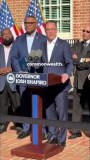
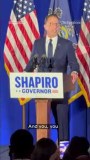
Still, voters in the Keystone State took a stance against the technology, voting in Democratic candidates promising to rein in Big Tech and data center expansions, including Gov. Josh Shapiro, who was himself depicted using AI in his opponent’s attack ad.
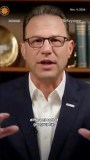
The deepfake ad, which featured a Shapiro avatar talking about a sexual harassment allegation from a former aide and claiming to support data centers, was created in support of Republican gubernatorial candidate Stacy Garrity’s campaign. The ad didn’t disclose the fact that the Shapiro on screen was AI-generated until more than 40 seconds in.
Garrity defended the ad, backing the claims made about Shapiro’s record, while reiterating that it did disclose its AI use. Shapiro’s campaign spokesperson responded by calling the ad “cheap, dishonest AI b*******.”
In the meantime, voters sought out candidates ready to take a stronger stance on data centers and Big Tech. State Sen.-elect Mark Pinsley (D-Lehigh Valley) made a statewide data center moratorium a central campaign promise, while U.S. Rep.-elect Paige Cognetti (D-Scranton) called for eliminating tax breaks for data center developers and establishing stronger federal guardrails on artificial intelligence.
And these wins came during what Erika Franklin Fowler, co-director of the nonpartisan research initiative Wesleyan Media Project, called the country’s first AI election.
The project, which has analyzed political advertising since 2010, identified 289 AI-generated political ads that ran through October of this year’s election cycle, costing $187 million in spending, and determined that more than 90% of those ads were purchased by Republican candidates and groups.
In short, voters didn’t fall for fake AI ads. Not the one showing Shapiro channeling lightning through his hands in a data center warehouse. Not the fake magazine covers state Sen. Doug Mastriano posted on X in the days before the election, which showed AI-generated images of the governor beneath headlines criticizing his budget record.
“It’s really important that we make sure that potentially deceptive ads like this don’t deceive the public, and that we have clear disclosures around the use of this technology in public advertising,” said Philip Hensley-Robin, executive director at Common Cause Pennsylvania, which advocates for fair elections and against the use of AI in political ads.
Common Cause supports HB 811, penned by state Rep. Tarik Khan, which would ban the use of all AI to create political ads. Many other states have disclosure laws on the books.
“Lots of states have done it. Pennsylvania should too,” Hensley-Robin said.
The harm of misinformation from AI ads
Reactions to the Garrity campaign’s deepfake Shapiro ad were mixed: Some viewers found it easy to spot the use of AI, while others said it was done quite professionally, even downgrading her other campaign ads to work done“in a high school multimedia class.”
Still, voters were quick to voice concerns about the use of the technology in general, saying it was a slippery slope, regardless of quality. “AI slop, especially deepfakes, have no place in politics,” one Facebook user wrote. “It’s bad enough outside of the political arena. If you and your campaign cannot stand on its own without the deception, perhaps you aren’t ready for the job. It’s terribly unethical.”
Hensley-Robin added, “As the technology gets more and more sophisticated, and it becomes harder and harder to distinguish a real video from an artificially generated one, the more important it is that we have these disclosures built in.”
But even if voters know an ad is using fake visuals and satire to poke fun at candidates, their messaging can still stick. That’s something laws surrounding AI disclosures in political ads can’t address.
Gang Wang, an associate professor of computer science at the University of Illinois Urbana-Champaign, said the damage from those ads could already be done. In 2023, Wang helped author a study on fake photos, which determined, from a small sample size, that the negative impacts of media that viewers recognize as AI-generated linger even if they know the messaging was inaccurate.
“Even if a user says, ‘Yeah, I realize that’s a deepfake,’ they still feel somehow negatively about the candidate being pictured in this deepfake,” Wang said.
And the technology improves daily. Garrett Brubaker is the owner and creative director at Studio Brubaker, an Indiana-based advertising company that put out about 300 political ads during this election cycle, all for Democratic candidates and causes. Only two used AI, and those ads were not deepfakes, which are typically defined as using AI to make someone appear to do or say something they never did or said.
“I don’t think people would immediately be able to clock an AI ad if they saw it,” he said. “That’s the scary part because, like I said, it’s only going to get worse.”
Further, not all viewers lock in to watch a political ad, so they might not notice a written disclosure on their screen or watch the visuals and notice they’re too smooth or perfect to be real.
“They’re often playing in the background, and people are not paying 100% attention,” Wang said.
How Pennsylvania handled AI misinformation during the midterms
During the midterms, the Pennsylvania Department of State directed voters to its fact-check page to vet claims regarding the voting process itself, said Geoff Morrow, press secretary for the Office of Communications and Press. The site includes frequently asked questions regarding who can vote and when, and clarifies the role of poll workers on voting day.
“Mis- and disinformation, whether created by humans or generative AI, has the potential to mislead voters or undermine confidence in elections,” Morrow said. “The Department strongly encourages everyone to verify the sources of election-related information before they share it and to ensure the information comes from trustworthy sources, such as their county elections office or the Department itself.”
Asked how state lawmakers plan to address the increasing threat of misinformation through AI, Morrow said: “The Shapiro Administration looks forward to working with the General Assembly to address emerging challenges and protect Pennsylvanians.”
Ilana Beller, director of state AI governance and tech policy for Public Citizen, said that while these laws can’t address satirical ads, they’re still helpful in alerting voters to the type of content.
“These laws are intended to prevent the nightmare-scenario deepfake—a deepfake that deceives the voters into believing a candidate actually did or said something they did not otherwise do and swings an election,” she said. “Because of protections around political speech, they cannot address satirical content. So while there was a lot of satirical content this election cycle, the laws were successful in having their intended effect of preventing the nightmare-scenario content.”
Pennsylvania leaders face pressure to act
Now, with new leaders on deck, voters are watching to make sure the promises they made to put guardrails on AI and Big Tech come to fruition.
For Shapiro, who reversed his stance on the issue of data center regulations, how he might outlaw AI in election ads remains to be seen. He initially fast-tracked data center approvals, but later imposed stricter regulations through an executive order. When he campaigned for reelection this year, Garrity criticized him for changing his mind, while promising her own moratorium on data centers, an irony voters pointed out given she used AI to generate her attack ad on the issue.
In the meantime, experts say more regulation is needed from the federal level to protect voters and the democratic process. Katie Paul, director of the nonpartisan watchdog initiative Tech Transparency Project, said the key is to rein in Big Tech companies such as Meta, which profit from running these deepfake ads and have little incentive to identify and remove them quickly, as well as AI companies that can produce the ads quickly and cheaply.
One potential approach is to put a cost on producing AI-generated political ads. “Having an appropriate cost associated with it makes it so [AI ads are] not the more cost-efficient option or nearly free,” she said. “That also lowers the bar of who can run political campaign ads.”
And while the next election cycle is two years away, the imminent threat is generative AI’s ability to revive old rumors with fake video footage, Paul said.
“The bigger threat is creating visuals to support misinformation, to support stereotypes that include fearmongering of different minority groups and things like that,” she said.
Of course, enforcing new oversight of these technologies won’t be easy.
“We’re talking about technologies that are also constantly evolving, which makes it even more difficult to put together hardline regulation because what you’re regulating may evolve and change within the next six months,” Paul added.
Beyond deepfake technology, Hensley-Robin warned of the use of AI to create fake voter profiles on social media in order to spread misinformation. And he referenced a recent trend wherein lawmakers have been caught using AI to generate bill language.
“(Disclosure laws are) kind of the very least that should be done when it comes to how it’s being used in our campaigns,” he said.