Last winter, the Trump administration signed accords with tech companies and 13 governors, including Gov. Josh Shapiro, whose states share the PJM Interconnection electricity grid, pledging to put people before data centers.
A GOP lawmaker in the Pennsylvania House now says those agreements provide the solution to the commonwealth’s energy crisis.
“When I saw these two documents come across my desk … I knew I had my answer,” said Rep. Craig Williams (R-Delaware).
Williams, who spent part of his career as a utility lawyer, introduced legislation last week that would codify the principles of those agreements in state law. Data center developers would be required to “build, bring or buy” new sources of power; pay for upgrading transmission lines and other infrastructure; and to pay for the power and related costs whether they use the electricity or not.
The new legislation comes as electricity prices jumped by up to 20% in parts of the state at the start of this month, Williams noted.
That’s on top of the $23 billion increase in electricity costs across the 13- state PJM Interconnection grid driven by data center development, according to an independent assessment of the region’s wholesale electricity markets.
The reason, he said, is the commonwealth hasn’t been the site of significant new power plant construction in more than a decade. Pennsylvanians are competing with data centers for a severely limited supply of electricity and that’s driving up prices.
Meanwhile, data center companies are entering long-term contracts with power generators to lock in current prices as they continue to rise. Williams said his bill would also require local electric companies to enter extended contracts as a hedge against future price increases. With greater certainty about demand, he added, investors would be more willing to build new generating assets.
“All of these things will have an immediate downward pressure on price,” Williams said at a news conference where he introduced the legislation with House Minority Leader Jesse Topper (R-Bedford).
But, Williams noted, the Trump administration’s principles and pledge have no authority in law.
“It’s unenforceable,” he said “Which means somebody has to run a bill to make law about energy in Pennsylvania … and I want to reiterate it’s the only one of its kind in the entire commonwealth.”
Competing proposals
Shapiro last month announced details of his plan to manage data center growth, and called on the legislature to work with him to make it law.
The Governor’s Responsible Infrastructure Development Standards would require developers to meet benchmarks for protecting energy affordability, promoting transparency and community engagement, supporting workforce and economic development and protecting the environment.
Those who demonstrate to the state that they can meet those requirements would be eligible for benefits including fast-tracked permits and sales tax breaks on computer equipment. Critics said that because the program would be voluntary, it wouldn’t stop an ill-conceived project. And a tech industry group said it would create a complicated framework that would challenge data center development.
Pennsylvania lawmakers have proposed more than 50 bills this session that mention data centers or their impact on electricity prices, according to the General Assembly’s online bill tracker. But Williams contends his Pennsylvania Ratepayer Protection Act is the only one that would require data center developers to bear all of their own costs for power.
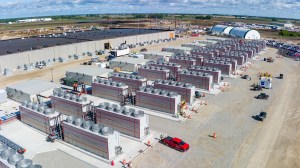
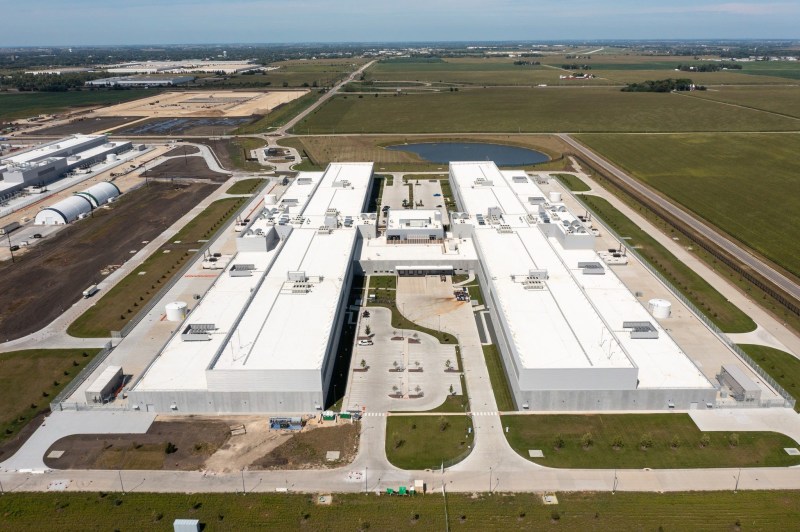
While data centers have been around as long as the internet, the race to develop artificial intelligence and market it to businesses and individuals brought the advent of the hyperscale data center. These structures resemble massive distribution warehouses but house thousands or millions of computers that can use as much power as a small city.
Pennsylvania shares its electricity grid with 12 other states and Washington, D.C. The grid is managed by PJM Interconnection, an organization charged with balancing demand on the grid with the most affordable energy available.
Most electricity is purchased on the spot market, meaning that utilities pay the price to produce electricity at any given moment and pass the cost to their customers. But PJM also runs a capacity market, in which producers bid to provide electricity when demand surges on the hottest and coldest days of the year.
In the last two capacity auctions, prices have risen to unprecedented levels. After the 2024 auction, the Shapiro administration sued PJM demanding a lower cap on prices. A settlement that capped the price at $325 for the 2025 auction has now been extended for auctions through the 2030 delivery year.
Joe Bowring, president of Market Analytics, the independent market monitor for PJM, said Williams’ proposal is largely in line with his organization’s recommendations for market reform. The Federal Energy Regulatory Commission (FERC) is now considering proposals and comments on new rules for the PJM market.
One point of departure Bowring highlighted: as a state with a deregulated electricity market, Pennsylvania’s local utilities, or electric distribution companies (EDC), compete with load-serving entities (LSE) that can provide power on more favorable terms. For that reason, requiring either to enter long-term agreements as a hedge against higher costs doesn’t make sense.
“In fact, there’s a long history of people entering into hedges at exactly the wrong time, when prices are high and locking in high prices,” Bowring said. “I don’t think it makes sense to put in a law to embed in a law what limits on the commercial practices of EDCs or LSEs.”
Bowring said there’s broad agreement among some stakeholders that data centers and other large loads should be taken out of the capacity market altogether. That requires state regulators to create new rate classes and rulebooks for data centers. A spokesman for the Pennsylvania Public Utility Commission said it is following the issue and will review the final legislation when it is available.
“That’s happening across the PJM footprint,” Bowring said. “What that does is address the local costs, so it ensures that if the utility … incurs costs to hook up a data center, that those costs are borne by the data center.”
But Bowring said the fastest way to stop prices from rising is to handle data center power demands separately from the standard capacity auctions, when generators bid to keep plants standing by for peak loads.
“So far, inclusion of data center loads in capacity auctions has increased costs for everybody by $23 billion so far over the last three auctions,” he said “And it will be another $5 billion to $10 billion if PJM continues data center load in the next auction, and another $5 billion to $10 billion in the auction after that.”