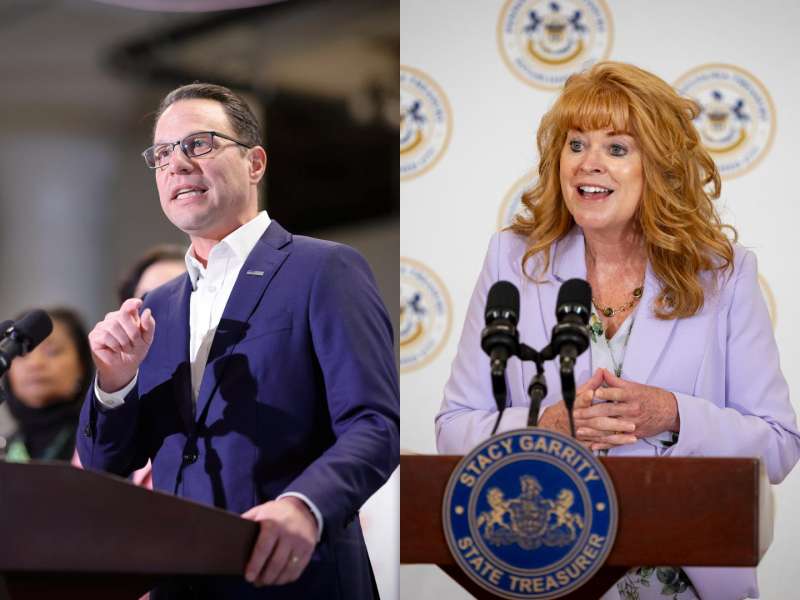
The Democratic and Republican nominees for Pennsylvania governor have spent a lot of their campaigns bashing one another.
Gov. Josh Shapiro’s campaign, along with the state’s Democratic Party apparatus, have sent out news releases attaching his opponent, Republican state Treasurer Stacy Garrity, to President Donald Trump and his policies.
Garrity has bashed Shapiro for political ambition and said she will “work every day to fix the problems Josh Shapiro has created.”
Beyond campaign rhetoric and culture wars, though, are real issues Pennsylvanians face daily, like housing insecurity and property tax burdens.
The notion of reforming property taxes in Pennsylvania, namely abolishing them, has been kicked around the state Capitol for decades with nothing but a graveyard of legislative efforts to show for it.
So where do the gubernatorial candidates stand on property taxes, that perpetual thorn in homeowners’ sides?
Stacy Garrity on Pa. property taxes
Most plans to abolish property taxes have and will come with increasing existing or creating new taxes. They take aim at school taxes, which represent the majority of a home’s property tax bill.
A proposal by Republican Sen. Dawn Keefer, who represents York County, has sat in the chamber’s Finance Committee for more than a year. It would replace property taxes by raising the personal income tax by 1.88% and adding 2% to the state’s sales and use taxes.
A companion bill in the House unveiled by Rep. Wendy Fink, a Republican representing York County, has had the same fate.
Garrity claims she could abolish school and municipal property taxes without raising existing taxes or creating new ones by using $11 billion in special funds that she said are sitting off the books.
Special revenue funds account for revenues from specific taxes or other earmarked revenue sources, which by law are designated to finance particular functions or activities, according to Matt Beynon, spokesman for Garrity’s campaign. “They are set up legislatively and the State Treasury Department is the custodian. By law, it is up to the legislature to establish how the funds are used and how they are spent,” Beynon told USA TODAY Network Pennsylvania.
“If we sweep some of that money out of the special funds and then redirect the interest into a new fund called, something maybe like, the People’s Fund, right, that we could pay at least five years, and that gives us enough time to unleash our natural gas that we have under our feet because we have to generate more revenue,” Garrity told a crowd at the Pennsylvania State Association of Township Supervisors conference in April.
Beynon suggested property taxes have increased by an average of nearly 20% since Shapiro became governor in 2022.
The annual growth rate of school property taxes in Pennsylvania has not exceeded 4.2% since the 2022-23 fiscal year, according to the state’s Independent Fiscal Office. The rate was 3.3% that year, 2.5% the next year and 4.2% in 2024-25, which is the most recent data, and represents the strongest annual increase in school district property taxes since 2007-08.
School districts’ taxes are set by their local school boards. Pennsylvania has 500 public school districts.
IFO estimates 3.4% growth rate of property taxes for 2025, 2.9% this year and 3.3% in 2027.
Shapiro’s property-tax record
While Shapiro’s campaign has not pushed out anything major surrounding property tax reform, his administration has helped ease the tax bill burden by enhancing the state’s Property Tax/Rent Rebate program.
In 2023, he signed into law an expansion of the program that provides a rebate to eligible seniors with an income of $48,110 or less. Rebates range from $380 to $1,000.
Garrity helps her aunt fill out her rebate application form each year, she told a crowd during a July campaign luncheon in Philadelphia.
The program’s first update in 17 years opened access to nearly 175,000 more Pennsylvania seniors, increased the maximum rebate from $650 to $1,000 and increased the income cap so more people could qualify.
In 2024, Shapiro extended the program’s application deadline and the payouts almost doubled. So far this year, nearly 376,000 rebates totaling $226.4 million are on tap to be distributed. The deadline to apply is Dec. 31.
A spokesperson for Shapiro told USA TODAY Network Pennsylvania the governor’s office is reviewing Keefer’s legislation, SB 962, as it moves through the legislative process.
A new challenger in the ring
Libertarian candidate Ken Krawchuk will be on the ballot for governor in November. He was certified by the Pennsylvania Department of State after submitting more than 5,000 signatures from registered Pennsylvania voters. His running mate for lieutenant governor is John Thomas.
The campaign says its message will focus on eliminating Pennsylvania’s property tax, improving educational outcomes and protecting taxpayers by opposing tax increases and government waste.
“This is a great day for anyone who hates property tax,” Krawchuk said in a statement after he was certified. “A great day for seniors in fear of being tossed out of their homes because of it, for young families who can’t afford their first house because of it, for those with kids in private schools where parents pay double for education, and for all of us who just don’t want to throw thousands of dollars year after year into a failed education system.”