Kutztown Area Transport Services is the third community ambulance service provider in the state to fold since June, highlighting a crisis happening across Pennsylvania.
In his more than 20 years in the emergency services industry, Mike Richards has never heard of an ambulance not showing up to a 911 call.
No matter how far away, if the call comes in, emergency responders will be there. Which is good, since Richards’ crew will now be taking on a bigger service area.
In August, after 37 years of operation, the Kutztown Area Transport Services, which provided ambulance services to Kutztown Borough, Maxatawny Township, and surrounding areas in Berks County, folded. It was the third community ambulance organization in Pennsylvania to cease operations in as many months.
“By no means was this an easy decision,” said Allison Fuller, Kutztown Area Transport Service office manager. “EMS is always forgotten; it’s always pushed aside, and I just hope that this brings awareness.”
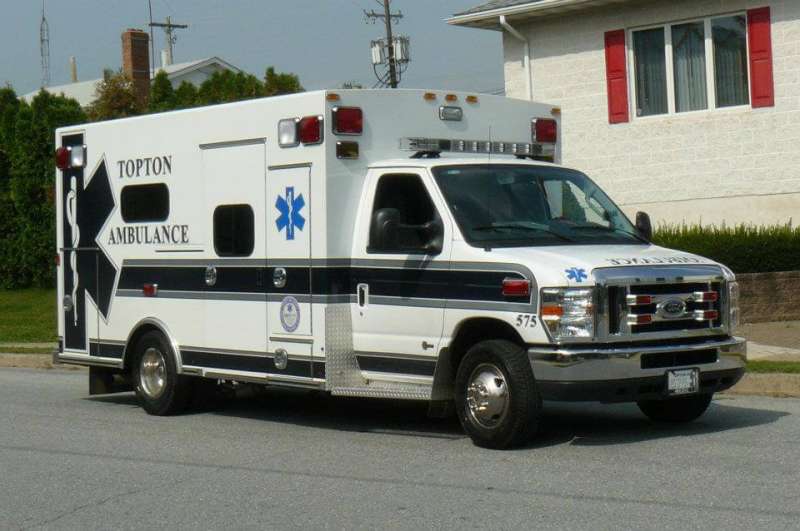
Richards, who is the Topton ambulance chief, said his department has taken over Kutztown’s coverage area and he has been in contact with all affected municipalities.
“Topton is staffing and adding additional trucks and providers to cover these areas so people continue to receive the same level of care they were receiving,” Richards said. “An ambulance will be coming, it’s just a matter of from where. Topton doesn’t foresee any major issues but if they come, we will be able to handle it. Our job is emergency services and we’re trained to handle whatever issues arise, including figuring out the logistics of how to get people the care they need when they need it.”
Kutztown is the most recent community ambulance organization to fold, and it sheds light on a statewide —even nationwide — crisis going on right now, said Shane Wheeler, chief of VMSC Emergency Medical Services in Lansdale, Montgomery County.
“This is not just a rural issue,” Wheeler said. “This is not a small town area issue. This is happening everywhere. This crisis, if not addressed soon, will turn into a disaster.”

The EMS Crisis in Pennsylvania
Staffing and funding are the main issues behind Pennsylvania’s EMS crisis, according to both Wheeler and Richards.
Wheeler’s organization provides coverage to 10 different municipalities. Yet, his crews are responding about 100 times a month, or about three times a day, to other areas they don’t provide primary service to. This is due, in part, to lack of staffing.
“It’s a cascade effect of stretching already stretched resources,” Wheeler said. “It creates a huge drain on all of us.”
Richards agrees.
“Staffing is huge,” he said. “We need to recruit people in EMS. There are a lot of classes out there to train people, we just need to get them in the system.”
Yet, training and classes can be cost prohibitive to many. And some organizations, especially in small towns, are run and/or staffed by volunteers.
“The method of delivering EMS has changed,” Wheeler said. “The ideology has changed. It used to be high (volunteerism), but volunteerism has dried up and training has gotten extensive and expensive.”
The other issue, and the one that ends up shuttering most ambulance providers, is funding.
In a statement, Fuller said the decision to stop ambulance services in Kutztown came after years of discussions with elected officials seeking municipal funding. She said that Kutztown and other EMS organizations are hampered by low reimbursement rates from insurance companies and payments being mailed to the subscribers, not the ambulance provider.
“There is a real failure in reimbursement and revenue opportunities for ambulance services,” Wheeler said. “There is a 14% gap in the services we provide and the reimbursement we get for those services. The underinsured and uninsured problem in our country is huge.”
Wheeler said that 25% of the time when his crew is sent out on a call, patients decline or outright refuse additional treatment at a hospital. And since insurance companies only pay when EMS transport a patient to the hospital, this means no reimbursement. Yet, Wheeler still has a staff to pay and an ambulance to gas up for those calls.
“There is no mechanism for insurance to pay us if we don’t transport a patient,” Wheeler said. “We could bill the person, but most of them don’t have the means to pay for it. Over the last 10 years, we have lost millions in revenue for service we can’t get paid for. We only really get paid for about 50% of all the work we do.”
In addition, while the state requires every municipality to have ambulance services, they don’t require the municipality to pay for it. So, in many cases, they don’t.
“In the 90 years our outfit has been providing service to the area, we only just started getting municipal funding at the end of last year,” Wheeler said. “Two of our 10 municipalities started kicking in some funding, about $130,000 between the two towns. Municipal funding is 1% of our funding stream.”
What Can Be Done?
In Wheeler’s opinion, the problem needs to be addressed at a local level.
“This problem cannot be solved at a federal level or a state level,” Wheeler said. “It has to be solved at a local level. Just like funding your police, if you want an ambulance service you have to fund it at a local level. The legislature requires municipalities to have an EMS service but doesn’t require them to fund it.
A recent poll of residents in Wheeler’s service area, which includes the North Penn area of Montgomery County and Philadelphia suburbs, found that 67% of respondents believe that EMS should receive dedicated tax funding just like fire and police services.
While many ambulance companies have reached out to the municipalities they serve for help with funding, Wheeler said most do so when they are already in financial straits.
“We should be going to our municipalities asking for an ounce of prevention instead of asking for a pound of cure,” Wheeler said.
At the same time, Wheeler said, ambulance companies also need to be more transparent with their finances.
“We need to be more accountable to the municipalities we serve,” he said. “We are asking them to provide funding for us, but we need to show them where that funding is going and that we are fiscally responsible.
“We have to abandon the ideology that we can do it alone. We can no longer get by with the bake sales and the raffles to fund our services. If you have a large tax base, maybe you could do it alone, but the bulk of municipalities can’t. The best model would be a regional approach.”
What Has the State Legislature Done?
Democrats in the state House have tried to provide some financial relief for local EMS in Pennsylvania but Republicans have thwarted those efforts.
In June, the state House unanimously passed House Bill 479, introduced by Rep. Lisa Borowski (D-Delaware), which would have amended the fiscal code to eliminate the provision that limits the per-mile Medicaid reimbursement of at least $4 for each mile beyond 20 miles of patient transport. However, when the bill went to the Senate, it was gutted and replaced with language for the Pennsylvania Award for Student Success (PASS), the Republicans’ school voucher bill.
Over the years, other bills amending how ambulance companies are reimbursed through Medicaid and other insurance companies, along with how they are funded, have been introduced, but never made it to the governor’s desk.
“EMS services all over Pennsylvania are struggling for various reasons, including low insurance reimbursements,” Sen. Judy Schwank (D-Berks) said. “In Berks County, we are lucky that Topton has stepped up and will provide EMS services for the areas no longer covered by Kutztown. The next community in Pennsylvania to lose its EMS provider may not be so lucky, which is why I believe the legislature will need to be part of finding a long-term solution.”
The Future of EMS in Communities Like Kutztown
Richards said residents of Kutztown and surrounding areas don’t need to worry about seeing a change in ambulance services. The area will be covered to the best of the entire industry’s ability.
“Even on a regular day when there are 10 trucks in service and a company is flush with money, if 10 calls come in that day, we can’t do it. We rely on our neighbors,” Richards said. “Everyone takes care of each other. We have built out backups all the way to the city of Reading and the city of Allentown. There is always going to be an ambulance coming, it’s just a matter of where from.”
Richards said that Kutztown has a fully staffed police department and fire department who are all CPR trained and can provide aid until an ambulance arrives.
But in a medical emergency, every moment counts.
“Every minute that we can reduce the response time improves survivability by 5-8%,” Wheeler said. “The longer it takes to get an ambulance to an emergency, the higher the chance of a negative result.”